On this page
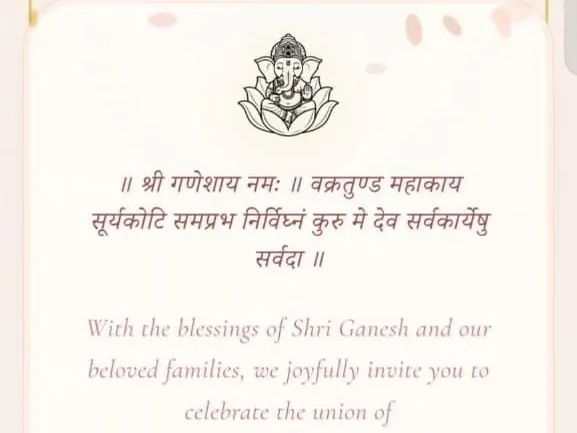
This page is about the message, not the card. The formal card matter, with its honorifics and the darshanabhilashi line, has its own guide to Hindi wedding invitation matter. Here are the short messages that carry the card to people: the invitation itself, the reminder, the day-of note and the thank-you.
How a Hindi message is different from the card matter
A Hindi wedding card follows a set order: the invocation, the invitation line, the couple with their parents, every function, then the host family. A WhatsApp message needs none of that, because the card or the link travels with it. The message has one job: to invite this person, warmly and with respect.
So it keeps three things from the card and leaves the rest:
- The request. आप सपरिवार सादर आमंत्रित हैं (aap sapariwar sadar aamantrit hain, you and your family are respectfully invited), or the gentler आपकी उपस्थिति प्रार्थनीय है (aapki upasthiti prarthaniya hai, we request your presence).
- Whose wedding, and how the reader is related to it. हमारी बेटी, हमारे बेटे, आपकी भतीजी: the relation says more than the name.
- The date and the place, in one line. The function timings stay on the card or the link.
Devanagari or Roman Hindi?
Both are right, for different readers. Many elders who grew up with Hindi newspapers read Devanagari on the phone far more easily than Hindi typed in English letters. Cousins, friends and relatives abroad often read Roman Hindi faster. Plenty of families send both, one below the other, Devanagari first.
| Devanagari | Roman Hindi | |
|---|---|---|
| Best for | Elders, relatives in Hindi-speaking towns, formal invitations | Cousins, friends, relatives abroad, Hinglish messages |
| Reads like | A card | A chat |
| Typing it | The phone's Hindi keyboard turns English letters into Devanagari as you type | Any keyboard |
| Check for | Matras: one missing ा or ी changes the word | One spelling throughout, such as aamantrit, not three different ones |
Messages from the parents
In most Hindi-speaking homes the invitation comes from the parents, so the message does too, even when the couple types it. The shape is the same every time: a greeting, 'our daughter' or 'our son' with the name, the date and the city, the request to come with the family and bless the couple, and the family's name at the end. If the messages go out from the parents' own phones, how to send wedding invitations on WhatsApp explains how to set that up. The full wording for each side, in English and Hindi, is in your son's wedding invitation and your daughter's wedding invitation.
- बेटी की शादी (a daughter's wedding): हमारी सुपुत्री का शुभ विवाह ... के साथ होना निश्चित हुआ है।
- बेटे की शादी (a son's wedding): हमारे सुपुत्र का शुभ विवाह ... के साथ सम्पन्न होगा।
- Both families together: दोनों परिवारों की ओर से सादर आमंत्रण, with both family names at the end.
Messages for elders and close relatives
For an elder, the message is a mark of respect before it is an invitation. Open with आदरणीय (aadarniya, respected), or पूज्य (pujya, revered) for grandparents and the most senior elders. Greet them the way you would at their door, with सादर प्रणाम or चरण स्पर्श, and ask for their आशीर्वाद, not only their presence.
- आदरणीय for uncles, aunts, family friends and anyone older than you.
- पूज्य for grandparents and the most senior elders of the family.
- जी after the relation: मामाजी, बुआजी, मौसीजी, ताऊजी. Families debate exactly who gets 'ji' on the card; in a message, give it to everyone older than you.
Then call. For grandparents and the eldest relatives, a WhatsApp message on its own can feel like being skipped. Call first or send a voice note, and send the link afterwards so they have every detail. A voice note script is among the samples below.
Messages for friends, in Hinglish
Friends get the Hinglish you already use with them. Keep it warm, make the joke if that is your friendship, and give them the one practical line they need: which functions they are invited to, and when to take leave. More English and Hinglish messages for friends are in wedding invitation messages for WhatsApp.
Reminder and day-of messages in Hindi
Send no more than three: a reminder a week before with the link, a short note the day before with only the next day's timings, and on the day, the venue's location and a number to call. The week-before message can be the warmest; the day-before one should be the shortest. There are more in wedding reminder messages.
Thank-you messages in Hindi
Within a week or two of the wedding, send a short धन्यवाद to everyone who came, blessed the couple or sent shagun. Thank them for their आशीर्वाद and स्नेह, never for the amount, and call the elders rather than only messaging them. More thank-yous, for gifts, for blessings from abroad and for the people who helped, are in thank-you messages after the wedding.
Words that need care
| Word | Use it for | Take care |
|---|---|---|
| सपरिवार (sapariwar) | Inviting the whole household | It promises that the whole family is welcome. If you can host only two people, write आप दोनों (both of you) instead. |
| स्वर्गीय (swargiya) | A grandparent or parent who has passed, in a blessing line | Put it before the name: स्वर्गीय श्री, then the name. In English, 'Late Shri'. One family asked us for exactly this line for a grandfather. |
| श्री, श्रीमती (Shri, Smt.) | Parents and elders | Some families prefer 'Mr. and Mrs.' even in a Hindi message. Both are respectful; match the card. |
| चि., आयु. (Chi., Ayu.) | The groom and the bride, on the card | Card words. In a message, हमारे बेटे or हमारी बेटी with the name reads more naturally. |
| विनीत, दर्शनाभिलाषी, स्वागतोत्सुक | The family's names at the foot of the card | One family asked us for exactly these sections, with ननिहाल पक्ष for the mother's side. A message can simply end with the family name: समस्त (surname) परिवार. |
Hindi invitation messages you can copy
From the parents, for elders, for the family group, for friends, then reminders, thank-yous and replies. Devanagari and Roman versions sit side by side where both are needed. Change the words in brackets.
आदरणीय [नाम] जी,
सादर प्रणाम।
ईश्वर की कृपा और बड़ों के आशीर्वाद से हमारी सुपुत्री [बेटी का नाम] का शुभ विवाह [वर का नाम] (सुपुत्र श्री [नाम] एवं श्रीमती [नाम]) के साथ [तिथि] को [शहर] में होना निश्चित हुआ है।
इस शुभ अवसर पर आप सपरिवार पधारकर वर-वधू को आशीर्वाद दें।
सभी कार्यक्रमों का समय और स्थान इस निमंत्रण में है:
[लिंक]
विनीत,
श्री [नाम] एवं श्रीमती [नाम]
समस्त [उपनाम] परिवार
Aadarniya [Naam] ji,
Saadar pranaam.
Ishwar ki kripa aur badon ke aashirwad se hamari suputri [Beti ka naam] ka shubh vivah [Var ka naam] (suputra Shri [Naam] evam Shrimati [Naam]) ke saath [Tithi] ko [Shahar] mein hona nishchit hua hai.
Is shubh avsar par aap sapariwar padharkar var-vadhu ko aashirwad dein.
Sabhi karyakramon ka samay aur sthaan is nimantran mein hai:
[Link]
Vineet,
Shri [Naam] evam Shrimati [Naam]
Samast [Upnaam] parivar
आदरणीय [नाम] जी,
सादर नमस्कार।
आपको यह बताते हुए हमें अत्यंत हर्ष हो रहा है कि हमारे सुपुत्र [बेटे का नाम] का शुभ विवाह [वधू का नाम] (सुपुत्री श्रीमती [नाम] एवं श्री [नाम]) के साथ [तिथि] को सम्पन्न होगा।
आपकी उपस्थिति और आशीर्वाद हमारे लिए बहुत मायने रखते हैं। कृपया सपरिवार पधारें।
निमंत्रण, कार्यक्रम और स्थान का नक्शा:
[लिंक]
समस्त [उपनाम] परिवार
Aadarniya [Naam] ji,
Saadar namaskar.
Aapko yeh batate hue hamein atyant harsh ho raha hai ki hamare suputra [Bete ka naam] ka shubh vivah [Vadhu ka naam] (suputri Shrimati [Naam] evam Shri [Naam]) ke saath [Tithi] ko sampann hoga.
Aapki upasthiti aur aashirwad hamare liye bahut maayne rakhte hain. Kripya sapariwar padharein.
Nimantran, karyakram aur sthaan ka naksha:
[Link]
Samast [Upnaam] parivar
सादर आमंत्रण
[वधू का नाम] और [वर का नाम] के शुभ विवाह के अवसर पर [वधू पक्ष का उपनाम] एवं [वर पक्ष का उपनाम] परिवार आपको सपरिवार आमंत्रित करते हैं।
[तिथि] · [स्थान], [शहर]
आपके आशीर्वाद के बिना यह खुशी अधूरी है।
पूरा निमंत्रण: [लिंक]
Namaste [Naam] ji,
[Tithi] ko hamari beti [Naam] ki shaadi hai. Aap sab zaroor aaiye, aapka intezaar rahega.
Card aur saari details: [Link]
पूज्य [दादाजी],
चरण स्पर्श।
[तिथि] को [नाम] की शादी है। हम आपको फ़ोन भी करेंगे, पर निमंत्रण पहले भेज रहे हैं ताकि आप आराम से देख सकें।
आपके आशीर्वाद के बिना कोई शुभ काम पूरा नहीं होता। आपका इंतज़ार रहेगा।
सारी जानकारी: [लिंक]
आदरणीय मामाजी और मामीजी,
सादर प्रणाम।
[नाम] की शादी की तारीख़ तय हो गई है: [तिथि], [शहर] में। मम्मी-पापा आपको फ़ोन करेंगे, पर हम चाहते थे कि निमंत्रण आप तक सबसे पहले पहुँचे।
आप दोनों के बिना यह शादी अधूरी रहेगी। कृपया सपरिवार ज़रूर आइए।
निमंत्रण: [लिंक]
Aadarniya Mama ji aur Mami ji,
Saadar pranaam.
[Naam] ki shaadi ki taarikh tay ho gayi hai: [Tithi], [Shahar] mein. Mummy-Papa aapko phone karenge, par hum chahte the ki nimantran aap tak sabse pehle pahunche.
Aap dono ke bina yeh shaadi adhoori rahegi. Kripya sapariwar zaroor aaiye.
Nimantran: [Link]
आदरणीय [नाम] जी,
सादर नमस्कार।
हमारी इच्छा थी कि घर आकर आपको निमंत्रण दें, पर दूरी के कारण इस बार यह संभव नहीं हो पा रहा। कृपया इस संदेश को ही हमारा व्यक्तिगत निमंत्रण समझें।
[वधू का नाम] और [वर का नाम] का शुभ विवाह [तिथि] को [शहर] में है। आप सपरिवार पधारें, यही प्रार्थना है।
निमंत्रण: [लिंक]
हम इसी हफ़्ते आपको फ़ोन भी करेंगे।
प्रणाम [बुआजी], मैं [आपका नाम]।
आपको ख़ुशख़बरी देनी थी। [नाम] की शादी [तिथि] को [शहर] में है, और आपको पूरे परिवार के साथ आना है। कार्ड अभी WhatsApp पर भेज रहे हैं, उसमें सारे कार्यक्रम और रास्ता है।
कुछ भी पूछना हो तो मुझे फ़ोन कर लीजिए। आपका इंतज़ार रहेगा।
सभी को सादर नमस्कार।
बड़ों के आशीर्वाद से [वधू का नाम] और [वर का नाम] का शुभ विवाह [तिथि] को [शहर] में होना तय हुआ है। आप सभी सपरिवार सादर आमंत्रित हैं।
सभी कार्यक्रम, समय, स्थान का नक्शा और आने की सूचना देने का फ़ॉर्म इस लिंक पर है:
[लिंक]
हम सबको अलग से फ़ोन भी करेंगे। कृपया लिंक पर बता दें कि आप कितने लोग आ रहे हैं, ताकि व्यवस्था ठीक से हो सके।
Sabhi ko saadar namaskar.
Badon ke aashirwad se [Vadhu ka naam] aur [Var ka naam] ki shaadi [Tithi] ko [Shahar] mein tay hui hai. Aap sab sapariwar aamantrit hain.
Saare functions, timings, venue ka map aur RSVP is link par hain:
[Link]
Link par zaroor bata dijiye ki aap kitne log aa rahe hain, taaki intezaam theek se ho sake.
[Naam], sun!
[Tithi] ko meri shaadi hai, [Shahar] mein, aur baraat mein sabse aage tu naachega. Office mein abhi se bata de, teen din ki chhutti chahiye.
Saara program aur location: [Link]
Girls! Date fix ho gayi hai: [Tithi], [Shahar].
Haldi, mehndi, sangeet, sab mein tum log chahiye, aur sangeet ki practice bhi. Outfits ki planning abhi se shuru karo.
Saari details: [Link]
RSVP link par kar dena, rooms book karne hain.
Ghar walon ne haan bol di hai, pandit ji ne muhurat nikaal diya hai, aur caterer ne menu bhej diya hai. Ab bas aapki kami hai.
[Vadhu ka naam] weds [Var ka naam], [Tithi], [Shahar].
Bahana banane ka koi form nahi hai, sirf RSVP ka hai: [Link]
नमस्ते [नाम] जी,
बस एक हफ़्ता बाकी है! [वधू का नाम] और [वर का नाम] के विवाह समारोह [तिथि] से शुरू हो रहे हैं।
सभी कार्यक्रमों का समय, स्थान और रास्ता इस लिंक पर है:
[लिंक]
आपका इंतज़ार रहेगा।
नमस्ते,
कल का कार्यक्रम:
हल्दी: सुबह [समय], [स्थान]
संगीत: शाम [समय], [स्थान]
लोकेशन: [लोकेशन लिंक]
किसी भी मदद के लिए [नाम] को फ़ोन करें: [नंबर]
कल मिलते हैं!
आज [वधू का नाम] और [वर का नाम] का शुभ विवाह है।
बारात: [समय]
फेरे (मुहूर्त): [समय]
भोजन: [समय] से
स्थान: [स्थान का नाम]
लोकेशन: [लोकेशन लिंक]
पार्किंग: [पार्किंग की जानकारी]
रास्ते में कोई परेशानी हो तो [नाम] को फ़ोन करें: [नंबर]
आदरणीय [मामाजी],
सादर प्रणाम।
आपने इतनी दूर से आकर हमें आशीर्वाद दिया, इसके लिए हम दिल से आभारी हैं। आपके आने से शादी की रौनक़ दोगुनी हो गई।
जल्द ही तस्वीरें भेजेंगे।
सादर,
[वर-वधू के नाम]
Namaste [Naam] ji,
Shaadi mein aane aur bachchon ko aashirwad dene ke liye dil se dhanyavaad. Aapke aane se sab kuch aur bhi khaas ho gaya.
Kuch tasveerein jald hi bhejenge.
Saadar,
[Upnaam] parivar
आदरणीय [नाम] जी,
आपके आशीर्वाद, स्नेह और शगुन के लिए हृदय से धन्यवाद। आपने इस दिन को और भी ख़ास बना दिया।
आपका स्नेह यूँ ही बना रहे।
सादर,
[उपनाम] परिवार
बहुत-बहुत बधाई! निमंत्रण के लिए हृदय से धन्यवाद। हम ज़रूर आएँगे और वर-वधू को आशीर्वाद देंगे।
बहुत-बहुत बधाई और शुभकामनाएँ! निमंत्रण के लिए धन्यवाद। इस बार आना संभव नहीं हो पाएगा, पर हमारा आशीर्वाद वर-वधू के साथ है। जल्द मिलेंगे।
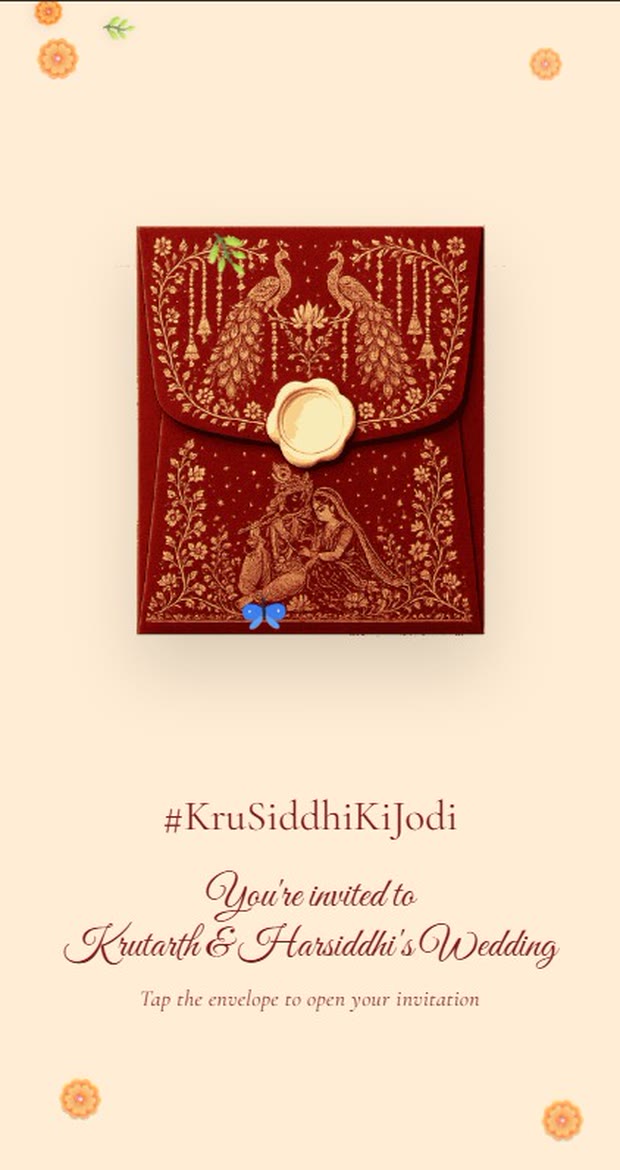
Want these words on a real invitation? See the designs.
Hindu wedding invitation designs
8 designs you can personalise, from ₹2,499. Open any one to see it full size, with a live demo.



Questions people ask
How do I write a wedding invitation message in Hindi?
Start with a respectful greeting (आदरणीय, with सादर प्रणाम for elders), say whose wedding it is and how the reader is related to it, give the date and the city, ask them to come with the family, and end with the link and the family's name. Write it in Devanagari for elders and in Roman script for everyone else.
What does 'sapariwar' mean on an invitation?
With your whole family. सपरिवार tells the household that everyone is invited, which is what most Hindi invitations intend. If you can host only two people, write आप दोनों (both of you) instead of leaving it vague.
Should I send the message in Devanagari or Roman Hindi?
Devanagari for those who read Hindi on their phone, usually the elders; Roman Hindi for younger relatives, friends and family abroad. Many families send both in the same message, Devanagari first.
Who should send the Hindi invitation message, the parents or the couple?
In most Hindi-speaking families the parents send it, in their own name, to their relatives and friends, and the couple send to their own friends. If the couple type the message for the parents, sign it in the parents' names.
Can the invitation website itself be in Hindi?
Yes. Invifest designs carry Hindi text, and Sindoori's Rooted theme sets Hindi beside English, with Ganesh ji and the shlokas. See Sindoori.
How do I mention a late grandparent in a Hindi message?
Put स्वर्गीय before the name in a blessing line, for example स्वर्गीय श्री (name) के आशीर्वाद से, or 'with the blessings of Late Shri (name)' in English. One family asked us for exactly this for a grandfather, and it reads as respect, not sadness.
How do I reply to a wedding invitation in Hindi?
Congratulate them, thank them and say whether you will come: बहुत-बहुत बधाई! निमंत्रण के लिए धन्यवाद, हम ज़रूर आएँगे। If you cannot come, send your blessings and say so kindly. Both replies are among the samples above.