Bilingual wedding invitation in Hindi and English: one link, both languages, and the lines in pairs
A wedding invitation in Hindi and English on one link: which language opens first, writing the Hindi right, and every line of the card in pairs to copy.

A bilingual wedding invitation carries the whole invite in Hindi and in English on one link, with a switch between them, so elders read Hindi and friends read English. Decide which language each link opens in, have an elder write or check the Hindi instead of a translation app, keep the shloka in Sanskrit in both, and keep names, dates, times and the venue the same in both.
On this page
- Three ways to put two languages on one invitation
- Which language should open first?
- The Hindi is not a translation of the English
- Why not Google Translate or ChatGPT
- Each side in its own language
- When one language is enough
- How Invifest makes a Hindi and English invitation
- Wording you can copy
- Designs
- Questions
"Hindi English dono" is one of the first things families ask us for. On our calls this October, roughly one family in three brought up the language. In most of those homes the elders read Hindi, or Marathi, Gujarati or Punjabi, while friends, colleagues and cousins abroad read English.
A printed card squeezes both onto the paper. An invitation link can do better: the whole invite in each language, one tap apart. This page covers the decisions that come with it, the mistakes we see most, and the lines of a Hindi card with their English pairs. For the Hindi card matter itself, see Hindi wedding card matter, and for the message that goes with it, wedding invitation messages in Hindi.
Three ways to put two languages on one invitation
Families choose one of these, and the choice decides how long the invitation feels on a phone.
| How it works | Suits | Watch for | |
|---|---|---|---|
| Side by side | Each Hindi line with its English line under it, on the same screen | A short card, a printed card, a PDF | Twice the scrolling on a phone, and elders read past the English to find their line |
| A language switch | The whole invitation in one language, and one tap on हिंदी or English changes all of it | An invitation link with several functions | Deciding which language opens first |
| A version for each side | The bride's side in one language, the groom's in another, in the same design | Two families who read different languages | Keeping the dates, times and venue identical on both |
Which language should open first?
This is the decision families go back and forth on. Some fathers insist on Hindi first, many couples want English first ("by default Hindi ki jagah English"), and one family changed its mind about it more than once. Decide by who receives the link, not by who orders it:
- The parents' relatives and the elders: open in Hindi.
- Friends, colleagues and guests from other states: open in English.
- Everyone on one link: open in the language most of the list reads, and say in the WhatsApp message that the other is one tap away.
When different guests get different links, each link can open in its own language. One family this season had a reception-only link that opened in Hindi and a second link, for another set of guests, that opened in English: the same design, with the switch on both.
The Hindi is not a translation of the English
A Hindi card and an English card are built in a different order, so a line-by-line translation reads oddly in both. The English card opens with the hosts, who request the pleasure of your company. The Hindi card opens with the blessing, names the groom with चि. and his parents, then the bride with आयुष्मती and hers, and ends with the invitation itself: आप सपरिवार सादर आमंत्रित हैं. Write each in its own order, and leave a line out of the view that does not need it.
| Part of the card | English view | Hindi view |
|---|---|---|
| The opening | ॥ श्री गणेशाय नमः ॥, in Devanagari | The same line, unchanged |
| Who invites | At the top: the parents, who request the pleasure of your company | At the foot, under विनीत or निवेदक |
| The groom | [Groom's name], son of Mrs [Name] and Mr [Name] | चि. [वर का नाम], सुपुत्र श्रीमती [नाम] एवं श्री [नाम] |
| The bride | [Bride's name], daughter of Mrs [Name] and Mr [Name] | आयुष्मती [वधू का नाम], सुपुत्री श्रीमती [नाम] एवं श्री [नाम] |
| The invitation | In the first lines | In the last line: आप सपरिवार सादर आमंत्रित हैं |
| The wider family | Often left off, or one line of names | दर्शनाभिलाषी, स्वागतोत्सुक and ननिहाल पक्ष, each with its own list |
| Day and date | Wednesday, [Date] [Month] | बुधवार, [तिथि] [महीना], with the month in full |
Why not Google Translate or ChatGPT
Some families come to us with Hindi made by an app. It looks right at a glance and goes wrong where elders read first. One family's ChatGPT Hindi went out with a mistake in their own surname. Apps also translate word by word: "eager to welcome you" comes back as a sentence, not as स्वागतोत्सुक, the heading Hindi cards use.
What works: an elder writes the Hindi or dictates it, someone types it, and then the family checks it against this list.
- Half letters. श्रद्धा, not श्रदधा. A missing half letter changes a name.
- Matras and the nasal dot. सुपुत्री, not सुपत्री; फेरों and जन्मों, with the dot, where the plural needs it. These are real corrections from this season's cards.
- Your surname, as your family writes it. Many surnames have two Devanagari spellings. Use the one on your family's own cards, not the one an app guesses.
- Weekdays and months. बुधवार, not वेडनेसडे; नवम्बर in full, not नव.
- Devanagari digits. If the Hindi side writes ९:०० बजे, check it on a phone. In some typefaces ९ (nine) looks almost like ६ (six), and one family read a 9 am function as 6 am. Or write 0 to 9 on both sides.
- Spaced-out letters. A heading style that spreads English letters apart breaks Hindi words into pieces, like दे ख ने. Hindi headings need normal spacing.
Each side in its own language
When the two families read different languages, give each side its own version in the same design, with the same date, times and venue. Families asked us for the groom's side in Marathi and the bride's in Hindi ("groom side me Marathi kar sakte hai?"), and for a Gurmukhi line on the Sikh family's version only. Honorifics follow the script: the Marathi version writes चि. सौ. कां. before the bride's name, as Marathi cards do.
The Marathi, Gujarati and Punjabi guides have each community's card matter, interfaith invitations covers two families of different traditions, and bride's side and groom's side invitations what changes between the two versions.
When one language is enough
Two languages are not always better. Some families drop the Hindi because of the honorifics that come with it; as one put it, writing chiranjeev and saubhagyavati correctly is "another ball game". If most of your list reads one language, one well-written language beats two hurried ones.
How Invifest makes a Hindi and English invitation
Invifest makes invitations and guest management for weddings and every big moment: our designers make each family its own invitation website. Hindi with English is one of the most common requests we get, and this is how we make it:
- One link, both languages. One tap on हिंदी or English switches the whole invitation: every function, the family and the reply form.
- The first language, link by link. The parents' link can open in Hindi and the friends' link in English. Changing it later is a small change, not a new invitation.
- Your family's Hindi, as you wrote it. We set it word for word, in a Devanagari typeface that sits with the design, and point out anything that looks misspelt before it goes out. The shloka stays in Sanskrit in both views.
- One count for the replies. The reply form asks in both languages, and every reply, in Hindi or English, lands in the same count for each function.
- A link for each side. The bride's side can open in Hindi and the groom's in Marathi or English, the same design with each family first. Our designs also carry Gujarati, Punjabi in Gurmukhi, Urdu, Tamil and Telugu wording.
- Aangan in Hindi too. With Aangan, our guest dashboard, the parents can run the guest list in English, Hindi, Marathi, Gujarati, Tamil or Kannada, send every guest their own link from their own WhatsApp, and see who is coming to which function.
- Changes by voice. With the first version we can send a private review link of your invitation: tap or circle a line, then say the change in Hindi or English, or type it. For a spelling, type the word yourself, so the exact letters reach the designer.
- The time it takes. The first version arrives within 3 days of your complete details, Hindi text included, or in under 24 hours on request, with two rounds of changes after it.
Sindoori can carry the whole card matter in Hindi, exactly as a printed shaadi card would, and every design opens on any phone from WhatsApp, with no app and no login. See all the Hindu wedding designs.
Hindi and English pairs you can copy
Each block gives the English and its Hindi pair. They are written to sit in their own view, not as word-for-word translations. Change everything in [brackets], and have an elder read the Hindi before it goes out.
With the blessings of Shri Ganesh and our elders,
we invite you and your family to the wedding of
[Bride's name] and [Groom's name]
श्री गणेश जी एवं बड़ों के आशीर्वाद से
[वधू का नाम] एवं [वर का नाम]
के शुभ विवाह में
आप सपरिवार सादर आमंत्रित हैं।
Mrs [Mother's name] and Mr [Father's name]
request the pleasure of your company
at the wedding of their son
[Groom's name]
with [Bride's name],
daughter of Mrs [Name] and Mr [Name], [City]
हमारे सुपुत्र
चि. [वर का नाम]
का शुभ विवाह
आयुष्मती [वधू का नाम]
सुपुत्री श्रीमती [नाम] एवं श्री [नाम], [शहर]
के साथ होना निश्चित हुआ है।
आप सपरिवार सादर आमंत्रित हैं।
विनीत: श्रीमती [माता का नाम] एवं श्री [पिता का नाम]
Mrs [Mother's name] and Mr [Father's name]
request the pleasure of your company
at the wedding of their daughter
[Bride's name]
with [Groom's name],
son of Mrs [Name] and Mr [Name], [City]
हमारी सुपुत्री
आयुष्मती [वधू का नाम]
का शुभ विवाह
चि. [वर का नाम]
सुपुत्र श्रीमती [नाम] एवं श्री [नाम], [शहर]
के साथ होना निश्चित हुआ है।
आप सपरिवार सादर आमंत्रित हैं।
विनीत: श्रीमती [माता का नाम] एवं श्री [पिता का नाम]
Haldi · [Day, Date] · [Time] · [Venue]
हल्दी · [दिन, तिथि] · [समय] · [स्थान]
Mehndi · [Day, Date] · [Time] · [Venue]
मेहंदी · [दिन, तिथि] · [समय] · [स्थान]
Sangeet · [Day, Date] · [Time] · [Venue]
संगीत संध्या · [दिन, तिथि] · [समय] · [स्थान]
Baraat departs · [Day, Date] · [Time]
बारात प्रस्थान · [दिन, तिथि] · [समय]
Pheras · [Day, Date] · muhurat [Time]
पाणिग्रहण संस्कार · [दिन, तिथि] · शुभ मुहूर्त [समय]
Reception · [Day, Date] · from [Time]
आशीर्वाद समारोह एवं प्रीतिभोज · [दिन, तिथि] · [समय] से
With blessings from: [Grandparents' names]
आशीर्वाद: [दादा-दादी के नाम]
Looking forward to seeing you: [Names]
दर्शनाभिलाषी: [नाम]
Eager to welcome you: [Names]
स्वागतोत्सुक: [नाम]
The maternal family: [Names], [City]
ननिहाल पक्ष: [नाम], [शहर]
Humbly yours: [Parents' names]
विनीत: [माता-पिता के नाम]
With the blessings of the late Shri [Name] and Smt [Name]
स्वर्गीय श्री [नाम] एवं स्वर्गीय श्रीमती [नाम] के आशीर्वाद से
Will you join us? / क्या आप पधारेंगे?
Yes, we will be there / जी हाँ, हम आएँगे
Sorry, we cannot come / क्षमा करें, हम नहीं आ पाएँगे
How many of you? / कितने लोग?
Which functions? / किन कार्यक्रमों में?
Your blessings for the couple / वर-वधू के लिए आपका आशीर्वाद
Your presence and blessings will make the day complete.
आपकी उपस्थिति एवं आशीर्वाद की अभिलाषा है।
Namaste [Name] ji,
Here is [Bride's name] and [Groom's name]'s wedding invitation. It opens in Hindi; tap English on it to read it in English.
[link]
नमस्ते [नाम] जी,
[वधू का नाम] एवं [वर का नाम] के विवाह का निमंत्रण भेज रहे हैं। यह हिंदी में खुलेगा, अंग्रेज़ी में पढ़ने के लिए उस पर English दबाएँ।
[लिंक]
Want these words on a real invitation? See the designs.
Hindu wedding invitation designs
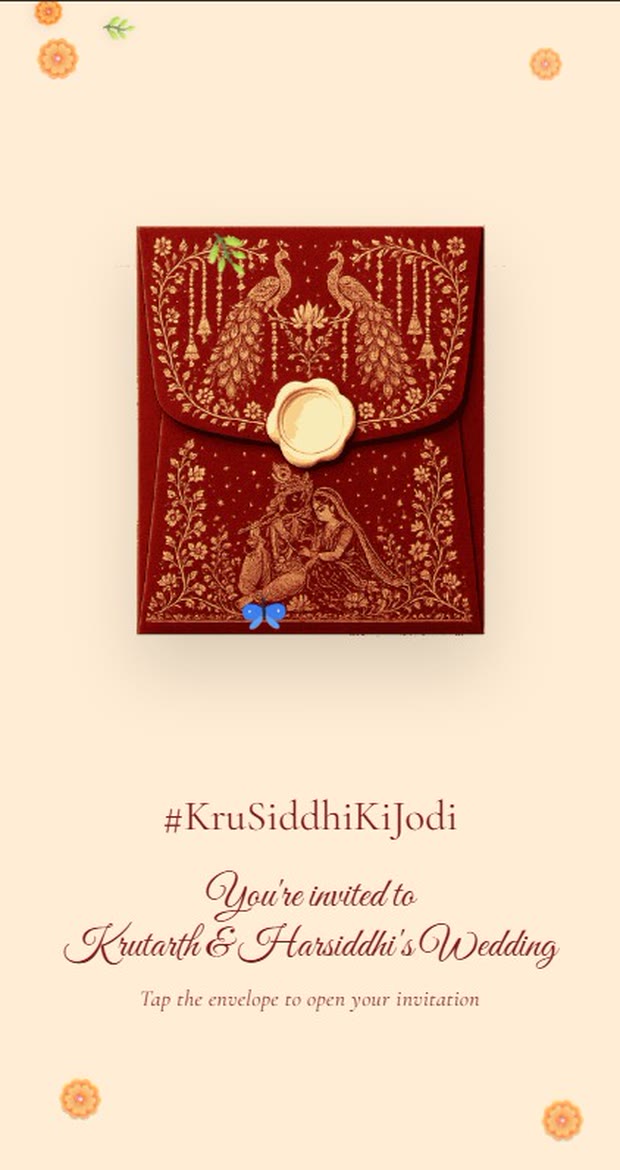
8 designs you can personalise. Open any one to see it full size, with a live demo.


Questions people ask
Can a wedding invitation be in Hindi and English both?
Yes. On a printed card the two sit side by side. On an invitation link the whole invite can be in each language with a switch between them, so elders read it in Hindi and friends in English. Invifest makes both on one link.
Should the invitation open in Hindi or in English?
In the language most of its guests read. A link for the parents' relatives usually opens in Hindi, and one for friends and colleagues in English. If different groups get different links, each link can open in its own language.
Can we use Google Translate or ChatGPT for the Hindi?
For a first draft at most. Apps translate word by word, miss the set headings such as स्वागतोत्सुक and विनीत, and get names wrong: one family's app-made Hindi went out with a mistake in their own surname. Have an elder write or check the Hindi before it is sent.
Should the shloka be translated into English?
No. Keep the shloka in Sanskrit, in Devanagari, in both views, the way it is recited. If you want English under it, write a blessing of your own, such as "With the blessings of Shri Ganesh".
Can the groom's side be in Marathi and the bride's side in Hindi?
Yes. Give each side its own version in the same design: Marathi on the groom's side, with चि. सौ. कां. before the bride's name, Hindi on the bride's, and the same dates, times and venue on both.
How do we write Chi. and Sau. Kaa. on the English side?
Most families keep चि., आयुष्मती and सौ. कां. on the Hindi side and write the names plainly in English, because English has no word that carries the same blessing. Our Hindi card matter guide explains each honorific.
Do names go in Devanagari on the Hindi side?
Yes, spelled the way your family writes them in Hindi, which is not always how an app spells them. Check every surname and the elders' names twice.
If a guest replies in Hindi, is it counted with the English replies?
On an Invifest invitation, yes. The reply form asks in both languages, and every reply goes into the same count for each function.
Does a bilingual invitation take longer to make?
Not once the Hindi text is ready, because it is part of the details. Invifest's first version arrives within 3 days of complete details, or in under 24 hours on request. What slows it down is Hindi that nobody has written yet.