Wedding invitation websites in India: how they work, whether you need one, and what they cost (2026)
What an invitation website is, when you need one and when a card is enough, what is inside, what it costs in India and how guests open it on WhatsApp.
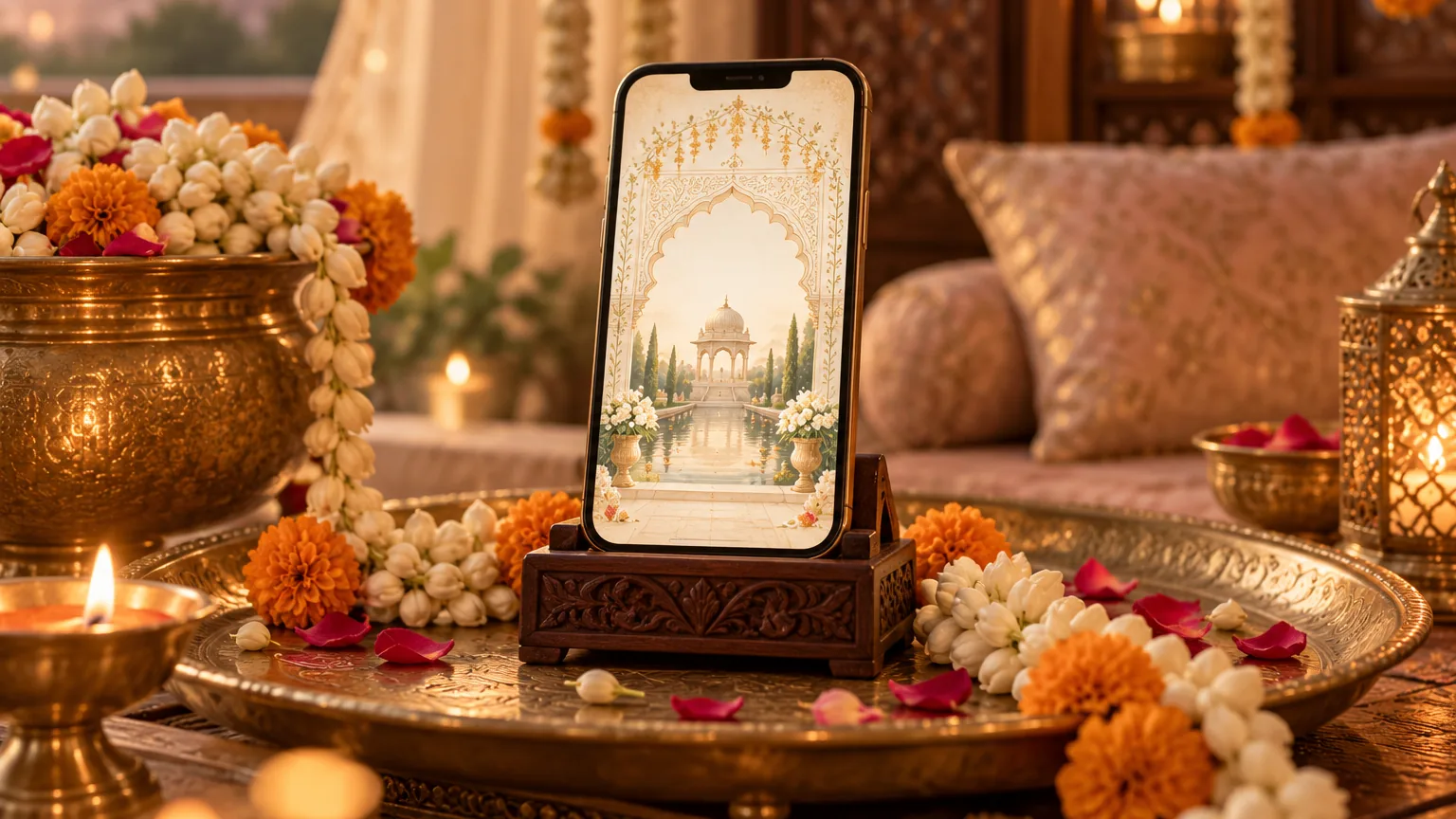
A wedding invitation website is one link, shared on WhatsApp, that opens like a small website on any phone with your names, every function, a live map, photos, music and a reply form. You need one once there are several functions, guests travelling or details likely to change; for a small function with every guest nearby, a card and a call are enough. They range from free builders to designer studios.
On this page
- What is actually inside one
- What is an e-invite? The four kinds
- Do you need a wedding website?
- What it costs in India
- Who makes them in India
- How a guest experiences it
- Invitation website or 'wedding website'?
- Where a printed card still wins
- What to have ready before you order
- Questions worth asking any provider
- Wording you can copy
- Designs
- Questions
A wedding invitation website is one link you send on WhatsApp. It opens like a small website on any phone, with your names, every function, the venue on a live map, your photos and a place for guests to reply. Nothing to download, nothing to print.
It is not the same thing as a video invite, and the difference matters more than most people expect. A video plays once and then it is buried in the chat. A link stays where it is. Two weeks later, when your uncle is trying to remember whether the Haldi is at ten or eleven, he taps the same link and it is still there.
This page covers what goes inside one, the four kinds of e-invite, whether you need a website at all, what it costs in India right now, who makes them, what a guest actually sees when they tap, where a printed card still wins, and what to have ready before you order. We make these invitations, so read the price section knowing that. Every other company's price below is quoted from its own page, checked on 27 October 2026.
What is actually inside one
Most invitation websites in India are built around the same handful of blocks. What changes is the design and how much is written for you.
- The opening. Usually an envelope or a closed card that the guest taps. It sets the tone before anything else loads.
- Your names and the date, with a countdown for the guests who like that sort of thing.
- Every function, separately. Roka, Haldi, Mehndi, Sangeet, the wedding itself, the reception. Each with its own date, time and venue, because they are rarely all in one place.
- A live map link per venue. This one quietly saves the most phone calls.
- Your story and photos, which is the part relatives actually scroll through.
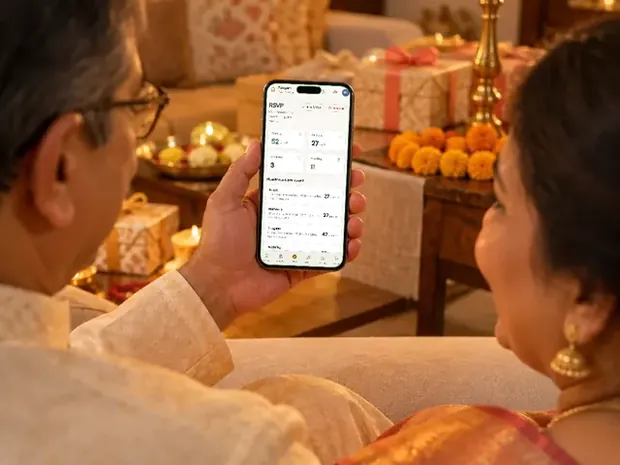
- RSVP, so you get a list instead of ninety separate replies.
- Background music, usually the couple's song, muted until tapped.
- Functions per guest. Close family is invited to everything, office friends often only to the reception. A good invitation website can give each group its own link with only their functions on it, so nobody opens a Mehndi they were not asked to.
- The WhatsApp preview. The picture, the title and the line that WhatsApp shows in the chat before anyone taps. It is the first thing every guest sees, and a link that arrives with no preview looks like a forward from a stranger.
What is an e-invite? The four kinds
An e-invite is simply an invitation sent to a phone instead of handed over on paper. In India it comes in four forms, and families often use the word for all of them:
| Kind | What the guest gets | Good for | Where it stops |
|---|---|---|---|
| An image | A picture of a card, in the chat | One function, a quick announcement | No map and no replies; a change means sending a new image |
| A PDF | A file of one or more pages | A few printed copies for the elders and the puja | Opens in a separate viewer, and has the same limits as an image |
| A video | A short film with your song | Relatives who would rather watch than read | Nobody can check a time on it without watching it again, and it cannot change after sending |
| A link, or invitation website | A page that opens in the phone's browser | Several functions, maps, replies and guests in other cities | It needs an internet connection, and it has to be built to open well on older phones |
Most families end up using more than one: the link as the invitation, a video for the relatives who will not tap, and a PDF for the handful of printed cards. Our guides compare a video and a website, explain animated invitations, and weigh digital against printed.
Do you need a wedding website?
An honest answer, because not every family does.
You can do without one if
- The function is small and every guest lives nearby, within one city and one or two phone calls.
- Every guest will get a printed card by hand, with a call from the family to follow it.
- Nothing is likely to change, and you can count the replies yourself.
Then a printed card, a phone call and a WhatsApp message with the time and a map pin will do the job well.
You will be glad of one if
- There are several functions, especially with different guests at some of them. Our guide to inviting guests to only some functions shows how families split the list.
- Guests are travelling, from other cities or from abroad, and need dates, venues and directions in one place they can find again. See inviting NRI guests.
- Details may still move. A time or a venue that changes after the invitations go out is corrected once on a link, while a forwarded card keeps the old one alive.
- The caterer needs a number for each function. A reply form collects it; the RSVP guide covers the rest.
Between those two, the real question is who does the work: a free builder costs your time, a designer costs money. Twelve real examples show what a finished invitation website looks like, and Invifest vs Wedence compares one made by designers with a builder you run yourself.
What it costs in India
Prices in this category are all over the place, mostly because five different things are sold under one name. In short, from each company's own page on 27 October 2026:
- An image or PDF card you fill in: free to about ₹200. Desievite's wedding cards are free or Rs 49 to Rs 199. You get a picture to forward, with no link and no replies.
- A video invite: ₹149 to ₹6,999. WedMeGood's start at INR 749, and its caricature and 3D videos are ₹6,999. A clip plays once; nobody can tap it or reply to it.
- An invitation website you build yourself: free to about ₹4,000, often for a limited time. Invity is free for 7 days, Rs 999 for 60 days and Rs 2,400 for 180 days.
- An invitation website made for you: ₹1,999 at Wedsmint, and ₹2,499 to ₹7,000 at Invifest. A designer builds it from your details, with changes included.
- Sending and replies run for you on WhatsApp: from ₹7,079 with GST at Weddingkart to ₹29,999 for Wedence Concierge.
Every price side by side, with what makes one invitation cost more than another and a real order added up, is in our cost guide.
Invifest's wedding designs cost ₹2,499 to ₹7,000, paid once, and each design's page shows its own price. That price includes the design made by hand with your details, two rounds of changes, a private list of every RSVP reply where the design has a reply form, and the link for life. A design made from scratch for one family is quoted per project: see custom design.
Two things in that list deserve a second look. A cheap website that is valid for 7 or 60 days stops working around the time relatives start asking for the wedding photos. And a video at a few hundred rupees is a fine announcement, but nobody can check the Sangeet timing on it a week later. Our guide to a video or a website weighs the two.
Who makes them in India
Three kinds of company sell invitation websites in India, and they suit different families.
- Do-it-yourself builders. You pick a template, type in your details and share the link. Cheapest, and quick if you enjoy that sort of thing, but the writing, the order of the functions and the checking are all yours. Invity, Wedence's free plan, Shubh Invitation and Canva's website builder work this way.
- Template apps and marketplaces. Image, PDF and video templates you fill in, often in many Indian languages. Desievite, WedMeGood and Crafty Art sell these. You usually get a file rather than a link, so there is no reply form and nothing to update later.
- Done-for-you studios. You send names, functions and photos on WhatsApp, a designer builds it, and you send back your changes. Wedsmint and Invifest work this way, and at the top end concierge services such as Wedence Concierge also run the guest list for you.
If you have the time and a clear idea, a builder is fine. If the invite has to go out this week, or six people in the family will have opinions about the wording, a studio saves you the back and forth. Our comparison of 25 options goes through each one with its replies, link life and price, and our list of custom e-invite studios covers the eleven that draw an invitation from scratch.
How a guest experiences it
This is what happens on your guest's phone, step by step, with Sindoori, one of our designs, as the example.
- The message arrivesYour line, your name, and the link, with a picture of the invitation above it. That preview is what makes a relative tap instead of scrolling past.
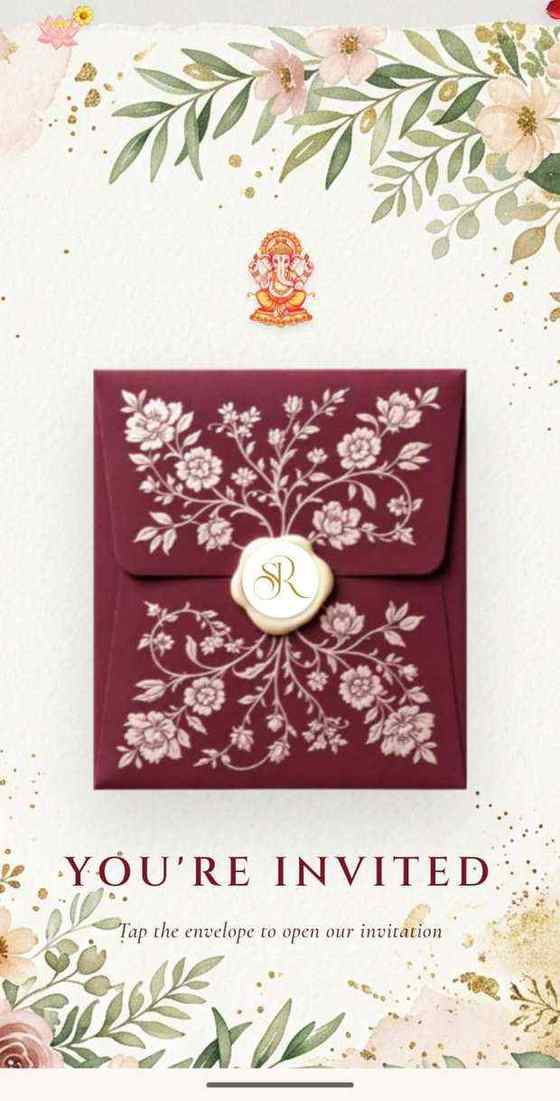
- One tap opens itNo app and no login. A red envelope fills the screen, with your initials on a wax seal. A real invitation never asks a guest to install anything, which is the quickest way to tell a real link from a scam.
- The seal breaks and the song startsThe music begins from that tap. iPhones only let a page start sound from inside a tap, so an invite that plays music by itself on Android can stay silent on an iPhone. Opening with a tap means everyone hears it.
- The functions, one at a timeEach function gets its own page with the date, the time, the venue and what to wear, in the order they happen.
- Directions in one tapA map button under each venue opens Google Maps on the guest's phone. No more 'venue kahan hai' calls on the morning of the Haldi.
- The replyName, how many are coming and which functions. It lands in your private list of replies, not in ninety separate chats.
The quickest way to understand it is to open one on your phone rather than a laptop, because a phone is where your guests will see it: watch the Sindoori live demo.
Invitation website or 'wedding website'?
If you live abroad, or plan with friends who married in the US or the UK, you will hear 'wedding website' used for something slightly different. Both are links. They do different jobs.
| US-style wedding website | Indian invitation website | |
|---|---|---|
| Its job | Practical information that follows a paper invitation: travel, hotels, the registry, an FAQ | It is the invitation itself, sent on WhatsApp |
| Events | Usually one wedding day | Four to eight functions over two or three days, often with different guests at each |
| Whose names | The couple | The couple, both families, often the grandparents |
| Language | English | English, Hindi or both, under the invocation your family uses |
| How guests get it | An address printed on the card, or an email | A WhatsApp message, often from the parents' own phones |
| Gifts | A registry link is normal | Rarely mentioned; some families add 'blessings only' |
NRI families often need both jobs done: the invitation the elders will forward, and the practical details that guests flying in will ask about, such as the nearest airport, where to stay and what the weather will be. Keep them in one link if you can, with the practical details on a page of their own, so nobody is holding two links and wondering which one is current. The destination wedding guide covers what travelling guests need to know.
Where a printed card still wins
An honest answer, because most people should do both.
A printed card is still the right thing to hand to grandparents, to place in the mandir, and to give to the families whose acceptance is signalled by receiving one in person. In a lot of Indian families the card is a formality with meaning attached, and a link does not replace it.
What the website replaces is the other two hundred cards. The colleagues, the cousins in other cities, the friends who will get the details wrong from a photo of a card. Most couples we build for print thirty to fifty cards instead of three hundred, and send the link to everyone else.
Those few printed cards do not need a design of their own. A PDF of the finished invite, laid out page by page in the same design, can go to any printer, for the elders and for the first card that is placed before Ganesh ji. At Invifest the PDF costs ₹1,000 and is remade once free if the invite changes (see a sample PDF). The digital or printed guide does the cost maths for both.
What to have ready before you order
The build goes fast when this is in one message. It stalls when it arrives in pieces over four days.
- Names, spelled the way you want them printedInclude how you want the two families named, and whether the groom's name or the bride's comes first. Both are done, and communities differ. The wording guide has a sample for every kind of host.
- Every function with date, time and venueThe full venue name and a Google Maps link if you have one. If a time is not fixed yet, say so and we leave a placeholder.
- Parents' and grandparents' namesExactly as they should appear, with the honorifics your family uses.
- Who is invited to whatIf some guests are coming to only some functions, say which, so they can get a link with only those.
- PhotosSix to eight is plenty. Landscape and portrait both work. Send originals, not WhatsApp forwards, because forwarding crushes the quality.
- A songOptional, but it changes the feel completely. Name the track, and the second it should start from if you love one part of it. The song guide helps you choose.
- Who should see the repliesReplies go to a private RSVP list that comes free with the invite. You open it with your own login and can export it to Excel.
The invitation timeline shows when each of these needs to be ready, counting back from the day the invitations go out, and the step-by-step guide to making one has the full checklist to copy.
Questions worth asking any provider
- Does the link expire, or need a yearly fee to stay online?
- Can details be changed after it is sent out? Times move. Venues change.
- How many rounds of changes are included, and what counts as one round?
- Can different guests see different functions?
- Where do the RSVP replies go, and can I download them?
- Does it open properly on an old Android phone on a weak connection? Half your guest list is on one.
- Can it be shown in Hindi, Gujarati, Tamil or whichever language your elders read most comfortably?
- Who writes the wording, and who checks the spelling of forty family names?
Our own answers are in our Terms, in plain words: two rounds of changes within 7 days of the first version, our own mistakes fixed free whenever you find them, and a link with no expiry date and no yearly fee.
How to send the link on WhatsApp
The message that goes with the link matters more than people think. A bare URL gets ignored. These are written to be forwarded, and the WhatsApp sending guide covers the rest: batches, broadcast lists and the preview picture.
With so much love and a lot of excitement, we are getting married.
Everything you need is here, all the functions, timings and directions:
[link]
We would be so happy to have you with us.
Aap sabhi ko sadar nimantran.
Hamare parivar mein shubh vivah ka avsar hai. Sabhi karyakramon ki jaankari is link par hai:
[link]
Aapka aashirwad chahiye.
Getting married in November. All the details, dates and venues are here: [link]
Would love to see you there.
Namaste [Name] ji,
With the blessings of our elders, our [son/daughter] [Name] is getting married to [Name] on [date].
Every function, with the timings and the map, is on this link:
[link]
Please do come, with family.
Want these words on a real invitation? See the designs.
Invitation designs
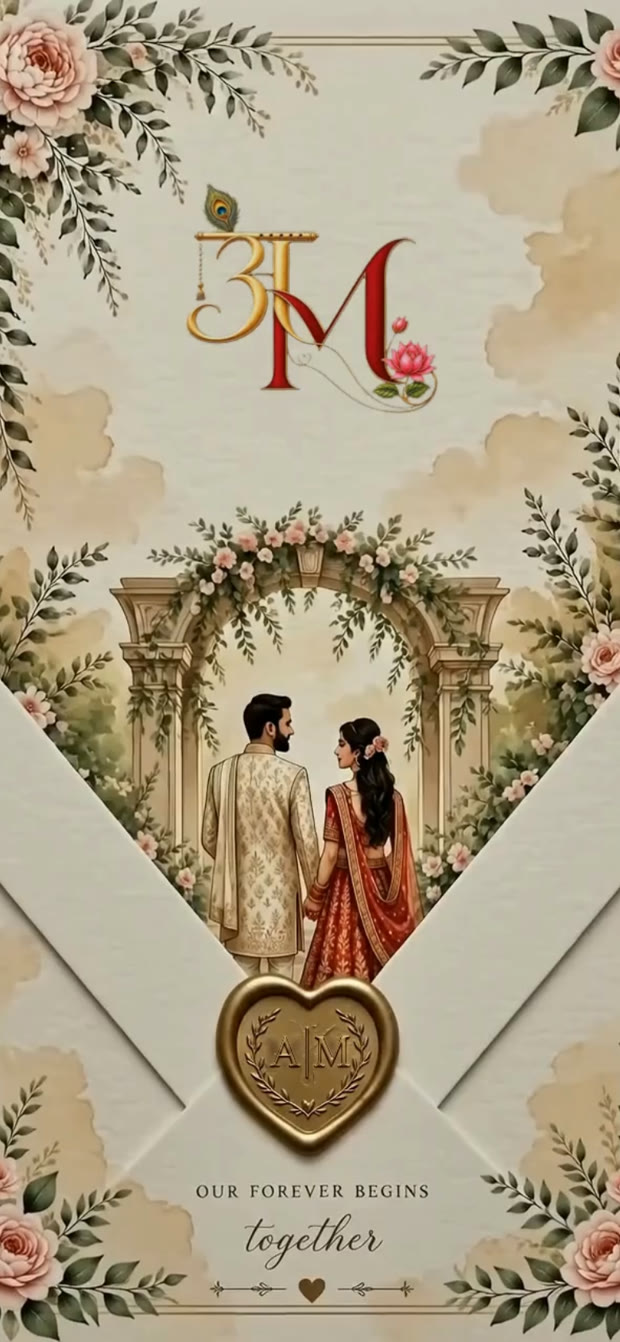
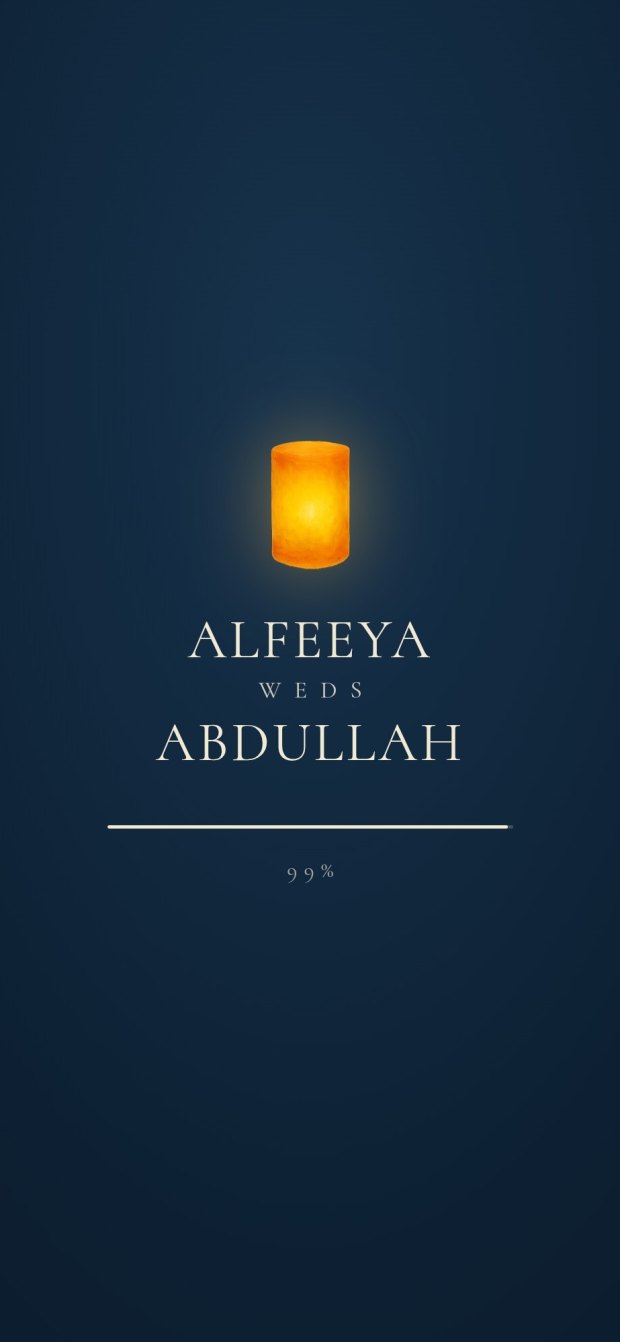
6 designs you can personalise. Open any one to see it full size, with a live demo.
Questions people ask
Do we need a wedding website for a small wedding?
Not always. If every guest lives nearby, gets a printed card by hand and a call, and nothing is likely to change, a card is enough. Once there are several functions, guests travelling, or times and venues that may still move, a link saves a great many phone calls.
E-invite kya hota hai?
E-invite yaani shaadi ka card jo phone par bheja jaata hai: ek photo, ek PDF, ek video ya ek link. Link wala e-invite ek chhoti website hoti hai, jisme har function ka din, samay, jagah aur map hota hai, aur mehmaan wahin jawab bhi de sakte hain. In English: an e-invite is an invitation sent to a phone, as an image, a PDF, a video or a link.
Do you put the wedding website on the printed card?
Yes, on the few cards you print: a short link or a QR code beside the RSVP line, so elders can open the same details. Remember that the printed link is your main link, and the main link shows every function, so cards for guests invited only to the reception should carry that group's own link instead.
Does the link stop working after the wedding?
Not with Invifest. Our Terms say the link has no expiry date and no yearly fee. 'For life' means for as long as Invifest runs, and if we ever had to close, you would get at least 90 days' notice and a copy of your invite to put online yourself, with a PDF of it and your guests' replies. Some services do give links a validity date, so ask before you pay.
Can different guests see different functions?
Yes. The main link shows every function. For guests invited to only one event, a separate link with just that event is an add-on at our checkout. If many guests need different combinations, Aangan, our guest dashboard, gives every guest a personal link with only their own functions, sent from your own WhatsApp. How families split the guest list walks through both.
Is it safe to put our venue and timings on a public link?
The link is unlisted rather than secret, so treat it like a card you might drop. Every invite we host asks search engines not to list it, so it is found through the link you share, not by searching your names. If you would rather not publish the home address, name the venue and leave the map to a landmark.
How long does it take?
The first version reaches you within 3 days of your complete details for most designs, and within 24 hours for festival designs. If you need it sooner, ask: on request we can make it in under 24 hours once the details are complete, and we confirm that with you before we start.
Where do the RSVP replies go?
To a private RSVP console that is free with the invite. Replies are not emailed to you one by one: you log in to see every reply in one list, and you can export it to Excel. Our RSVP guide covers what to ask and when to chase.
Can we get a PDF or a video of the same invite?
Both are add-ons at our checkout. The PDF (₹1,000) is the invite's own pages laid out page by page, for printing a few. The 4K video (₹1,100) is a short film of the invite coming alive with your song, with a light 720p copy for WhatsApp. Both are made from your final invite, and there is a sample of each on our samples page.
Can we change the time after sending it out?
Yes, and this is one of the strongest reasons to use a link. Everyone who already has it sees the corrected version the next time they open it. Two rounds of changes are included within 7 days of the first version, and a mistake of ours is fixed free whenever you find it.
Can guests open it without internet?
No. It is a website, so it needs a connection. It is built to be light, so it loads on a weak signal, but a guest who is fully offline will not see it.