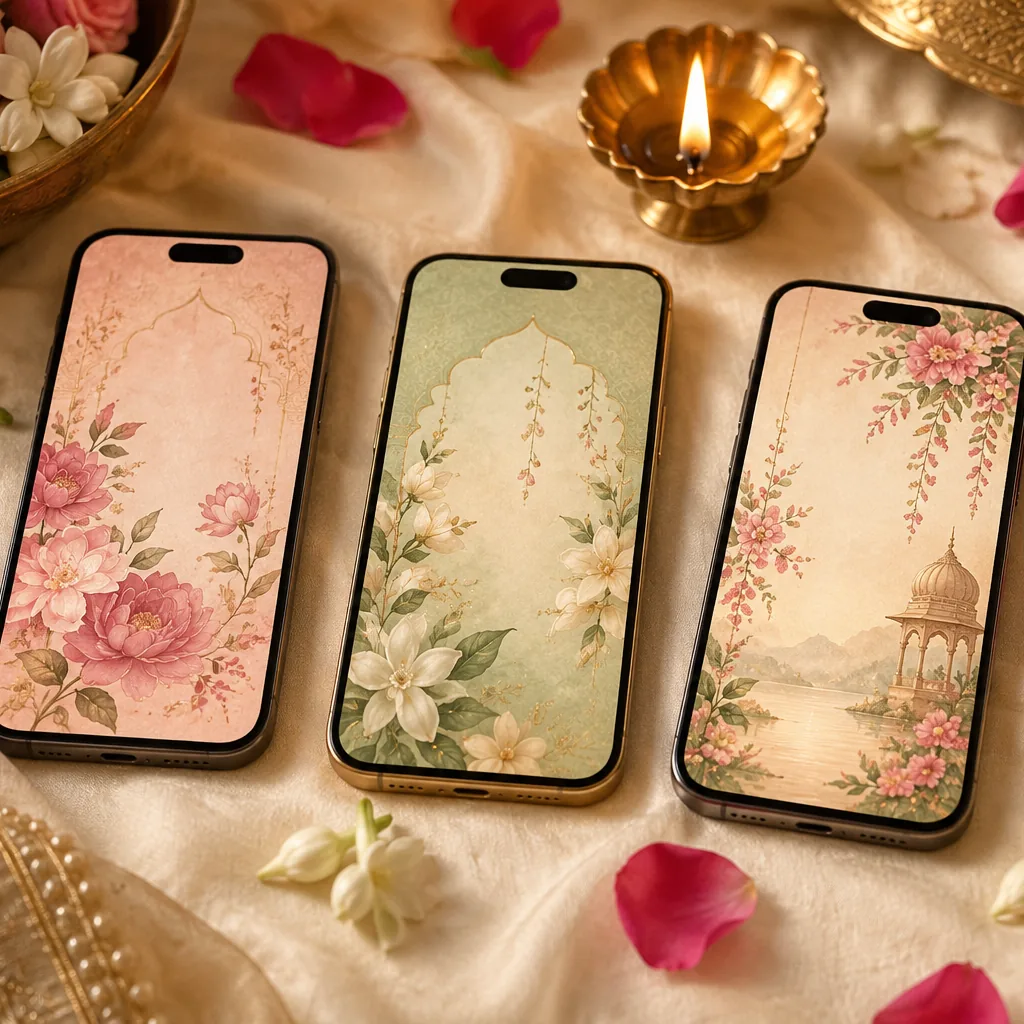
Indian wedding website examples: 12 real designs to open on your phone, and what makes each one work
Real Indian wedding invitation websites to open on your phone: Hindu, Sikh, Muslim, Christian and South Indian designs, and what makes each one work.
Open a few on your phone, the way your guests will: Sindoori turns the printed shaadi card into a link, Bansuri paints every function, Kesariya carries a long Rajasthani calendar, Dakshin puts the muhurtham first, Mehr suits a small nikah, Cana switches between English and Hindi, and Ik Onkar follows the order of an Anand Karaj. The good ones share one thing: the oldest guest understands the first screen.
On this page
- The 12 examples at a glance
- Hindu wedding website examples
- South Indian wedding website examples
- Muslim wedding website examples
- Christian wedding website examples
- Sikh wedding website examples
- What the good examples have in common
- What families changed after their elders saw it
- How to look at an example properly
- Designs
- Questions
The quickest way to know what you want is to open a few real invitation websites on your phone, from WhatsApp, the way your guests will. Here are twelve, one tradition at a time, each with a live demo and a note on what makes it work for the families it was made for.
These are our own designs, so this is our work, described by us. We do not show families' invitations: our Terms promise never to use a family's invite to promote our work without their written consent, so every example below opens the design's own live demo. Each design is made into yours by our designers, with your names, every function, your photos and your song.
The 12 examples at a glance
One row per design, in the order of the sections below. Tap a design's name further down to open its demo; on a laptop it opens in a phone frame, but a real phone tells you more.
| Design | Made for | Functions on it | What to notice |
|---|---|---|---|
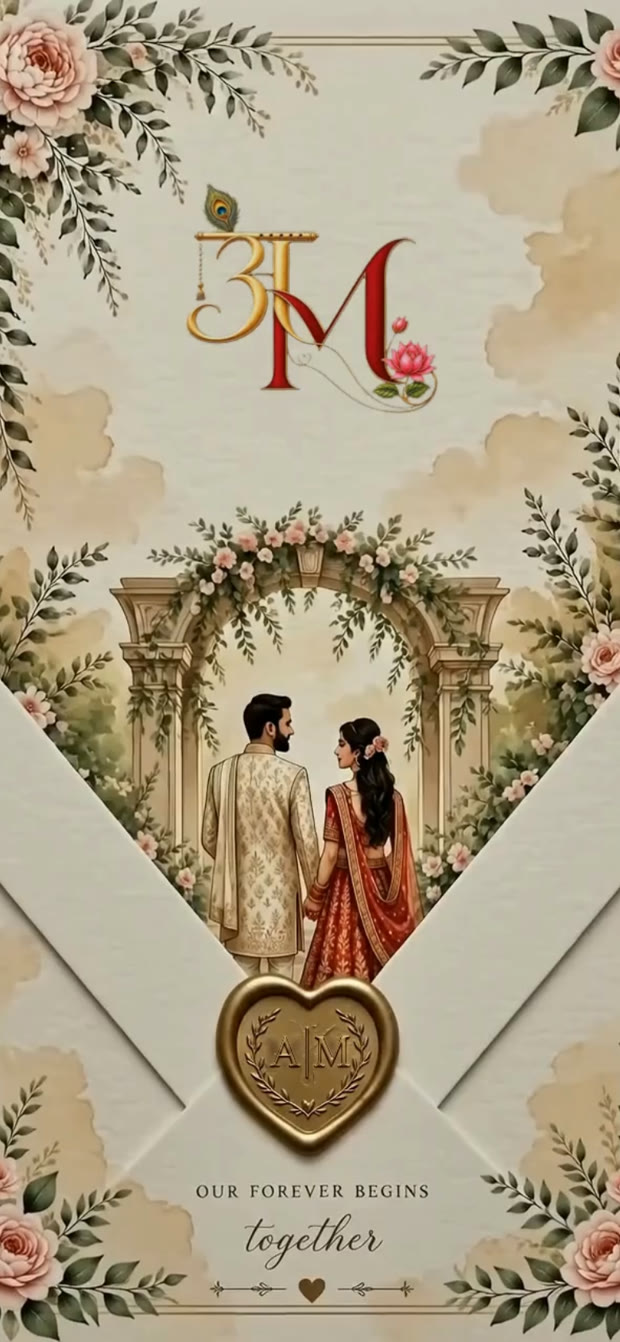
| Sindoori | North Indian families who want the classic card | Ganesh puja, haldi, mehndi, sangeet, baraat, pheras, reception | A red envelope with a wax seal, and Hindi wording laid out as on a printed card |
| Bansuri | Punjabi and North Indian families | Sagan, haldi, the after party, the wedding | Painted art and a wardrobe note for every function |
| Kesariya | Marwari, Rajput and Rajasthani families | Eight, from the Ganesh puja and mahira dastoor to the reception | A long calendar with nothing squeezed onto one page |
| Pichwai | Pushtimarg and Gujarati Vaishnav families | Ganesh puja to reception | It opens on a Nathdwara painting, with the names set into an arch |
| Kohinoor | Big weddings across several venues | Ganesh puja to reception, seven in all | A map button on every function |
| Dakshin | Tamil, Telugu, Kannada and Malayali families | Nischayathartham, pellikuthuru, haldi, muhurtham, reception | The muhurtham time written out in full, under a painted gopuram |
| Mehr | A small, formal nikah | Mehndi, nikah, walima | Restraint: the wording matters more than the ornament |
| Mehfil | A Muslim wedding over several days | Manjha, mehndi, nikah, walima | Urdu calligraphy, and a map for each place |
| Cana | Christian families who read English and Hindi | Roce, sangeet, nuptial mass, reception | One tap switches the whole invitation between English and Hindi |
| Cathedral | A formal church wedding | Engagement, the ceremony, reception | Room for the order of service and who does each reading |
| Ik Onkar | An Anand Karaj | Akhand Path and bhog, chooda, mehndi, jaggo, Anand Karaj | The time the laavan begin, and a reply form sized for the langar |
| Phulkari | A festive Punjabi wedding | Six, from the Akhand Path to the reception | A long function list that does not look crowded |
Hindu wedding website examples
Sindoori: the printed shaadi card, sent as a link
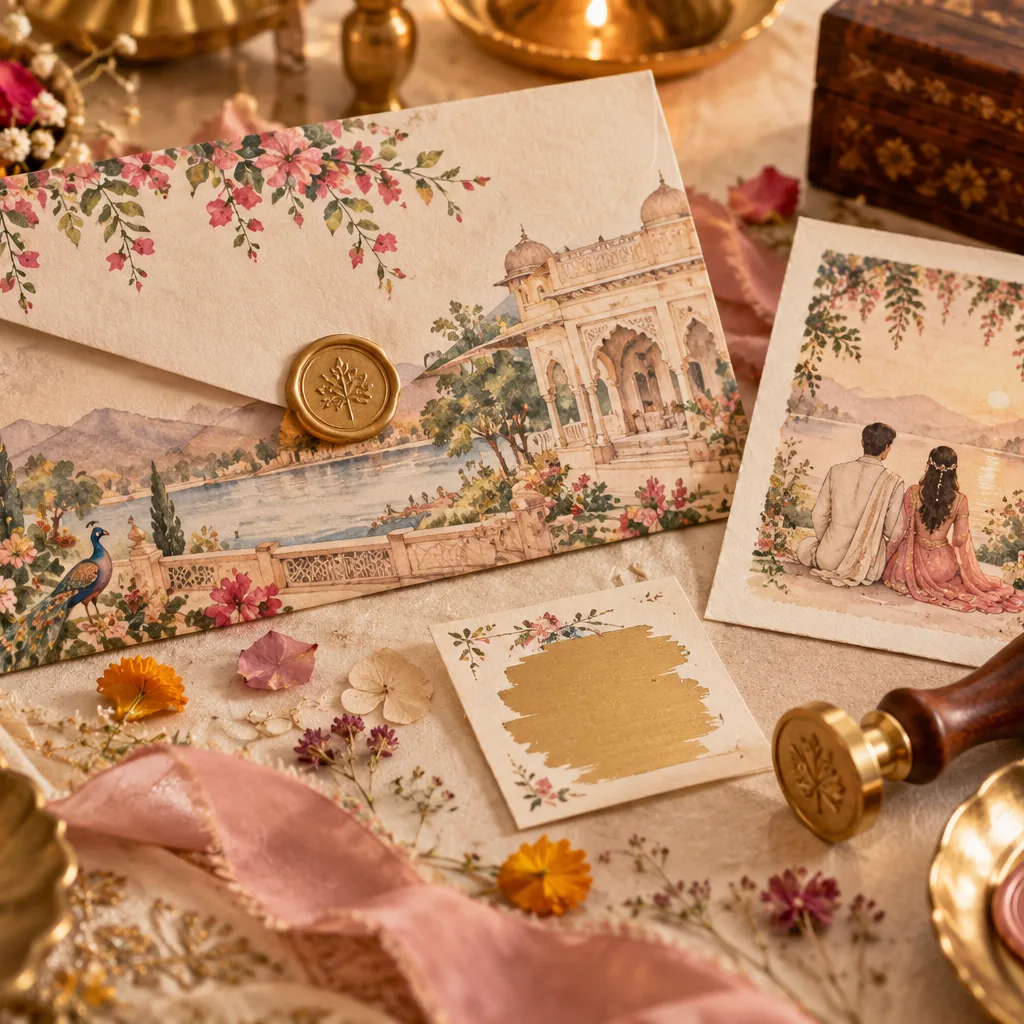
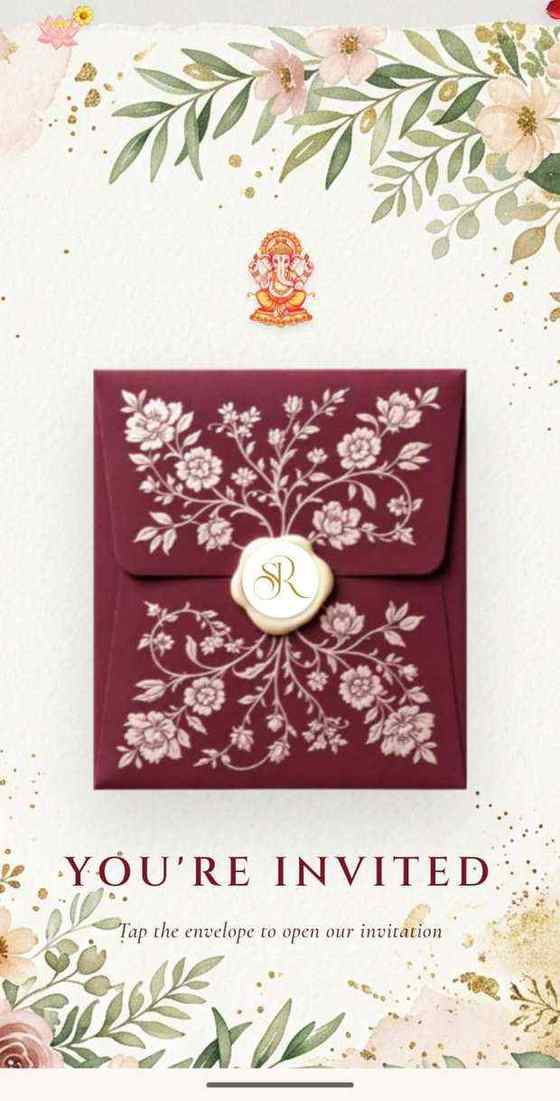
Sindoori is for families who are not trying to modernise the invitation, only to send it faster. It arrives as a sealed red envelope with the couple's initials on the seal, and one tap breaks it open. Every ceremony gets its own card, from the Ganesh puja to the reception, and the wording can be in Hindi exactly as it would appear on a printed card.
Why it works: nothing on it is new to an elder. It reads like the card they were expecting, so the only new thing is the map button. Sindoori also comes in six finished themes, from Traditional to Playful, if you like the structure and want a different mood.
Bansuri: painted art for every function
Bansuri is blush, wine and gold, named for the flute on its monogram. It opens the way a printed card reads: the Ganesh invocation, the blessing of the elders, the two names with the parents beneath each, and the date written large. Guests scratch to reveal the date, and every function, the sagan, the haldi, the after party and the wedding, has its own painted artwork, its time and a note on what to wear. Photographs land one at a time like a stack of polaroids, and the reply form has a line for advice.
Why it works: the playful parts sit around the facts, never in front of them. And a wardrobe note on each function answers 'what do we wear to the haldi' before anyone has to ask it in the family group.
Kesariya: a long Rajasthani calendar
Kesariya is saffron and marigold, for Marwari, Rajput and Rajasthani families. A Rajasthani wedding has a long calendar and this design carries all of it, each on a card of its own: the Ganesh puja, mahira dastoor, haldi, mehndi, sangeet, the baraat, the pheras and the reception.
Why it works: eight functions on one printed card means small type and something left out. Here a guest scrolls to their function and finds its time and venue at a size they can read.
Pichwai: the painting is the invocation
Pichwai is painted in the Nathdwara tradition, Shrinathji with lotus ponds, cows and gopis in deep blue and gold, for Pushtimarg and Gujarati Vaishnav families. It opens on the painting itself, with the names set into an arch, and the wording can carry Shree Krishna Sharanam Mama and be written in Gujarati.
Why it works: these families recognise the art before they read a word, so the first screen says whose wedding it is and in what spirit without a single line of text. Our Vaishnav wording guide has the lines that go with it.
Kohinoor: a big wedding in several places
Kohinoor is gold leaf and deep maroon, made for the big wedding: many functions, many guests, several venues. Every function has its own map button, which matters when the sangeet, the pheras and the reception are in three different places.
Why it works: at a big wedding the call the family gets most is 'venue kahan hai'. A map under every function answers it before the phone rings. More Hindu wedding designs are on their own page.
South Indian wedding website examples
Dakshin: the muhurtham comes first
Dakshin is temple gold and kumkum red with a gopuram behind the names, and it is not tied to one state: a Tamil, Telugu, Kannada or Malayali family can each make it their own, with the wording in their language or in English. The muhurtham time is written out in full, and the nischayathartham, pellikuthuru, haldi, muhurtham and reception each get a card.
Why it works: an early muhurtham is the one detail guests plan their morning around, so it cannot be a line at the bottom. Pattu, built on a Kanjeevaram border for Tamil Brahmin, Iyer, Iyengar and Telugu families, goes further and makes the muhurtham the first thing a guest reads. Both are on the South Indian designs page.
Muslim wedding website examples
Mehr: a small nikah, kept formal
Mehr is ivory and soft gold, made for a nikah kept deliberately small and formal. It can open with a Bismillah, the wording can be in Urdu, Hindi or English, and the mehndi, the nikah and the walima each have a card.
Why it works: with a short guest list every seat is counted, so the reply form matters more than the ornament, and the design stays quiet to match the day.
Mehfil: the whole calendar, both sides counted
Mehfil puts Urdu calligraphy over a jaali screen, in ivory and deep green, and gives the manjha, the mehndi, the nikah and the walima a card each, every one with its own map button.
Why it works: the nikah and the walima are often in different places and hosted by different sides. A map button on every function, and replies that give each side its own numbers, settle both. The Muslim wedding designs page has the rest, and our Nikah wording goes with any of them.
Christian wedding website examples
Cana: one link for English and Hindi readers
Cana arrives as an embossed white envelope with a sage wax seal. One tap breaks the seal and a short film swings the gates open. Inside, both families are introduced properly, guests rub a save-the-date to reveal it, the roce, the sangeet, the nuptial mass and the reception each have a card, and every venue has a map button.
Why it works: one tap switches the whole invitation between English and Hindi, so the grandparents and the cousins read the same link in their own language.
Cathedral: room for the order of service
Cathedral is formal and arched, for a church wedding with the weight a nuptial mass deserves. It has room for the order of service, the processional, the vows, the readings and who is reading them, which most invitation designs have nowhere to put, along with a Bible verse and the church on a map.
Why it works: guests at a church wedding like to follow the service, and the readers like to see their names. For a Goan or Mangalorean wedding, Bellissimo gives the roce a card of its own instead of a line at the end. See every Christian wedding design.
Sikh wedding website examples
Ik Onkar: the real order of an Anand Karaj
Ik Onkar opens the way the Mool Mantar does, in saffron and Nishan Sahib blue. It follows the sequence of a Sikh wedding rather than a generic running order: the Akhand Path and its bhog, the chooda ceremony, the mehndi, the jaggo night and the Anand Karaj, with the time the laavan begin. The wording can be in Gurmukhi, Punjabi or English.
Why it works: the reply form is there so the langar count is right, and the gurdwara is on a map for the guests who have never been.
Phulkari: many functions, still easy to read
Phulkari runs the phulkari stitch through its borders and dividers. It is the most festive of our Sikh and Punjabi designs, and it carries the Akhand Path, the chooda, the mehndi, the jaggo, the Anand Karaj and the reception without looking crowded.
Why it works: the replies give both the langar and the sangeet counts, two very different numbers. The Sikh wedding designs page shows all three, and the Anand Karaj wording guide has the lines.
What the good examples have in common
Look past the colours and the twelve share a handful of decisions. They are worth checking on any invitation website you are considering, ours or anyone else's:
- One tap to open, nothing to install. A seal, an envelope or a single button. The tap also starts the song, because an iPhone lets a page play sound only after a tap.
- Names and the date on the first screen. A guest who never scrolls still knows whose wedding it is and when.
- A card for every function, in order, each with its date, time, venue and a map button. Our guide to inviting guests to only some functions covers who should see which card.
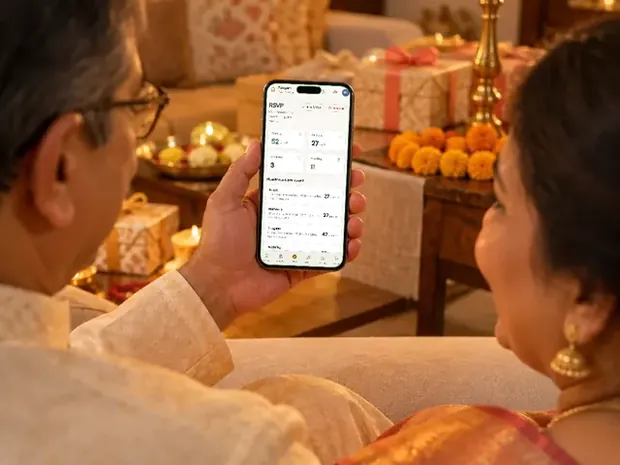
- A reply form that asks what the caterer needs: who is coming, how many and to which functions. The RSVP guide has the four questions.
- The language the elders read, Hindi, Gujarati, Gurmukhi, Urdu, Tamil or English, or a switch between two.
- Art that means something to the family: Shrinathji for a Pushtimarg wedding, a gopuram for a South Indian one, phulkari for a Punjabi one. Art the family recognises says in one look what a paragraph would take to explain.
What families changed after their elders saw it
The examples above are the designs. The lessons below come from the families we make them for, and they have shaped how we make invitations since.
- The first screen is judged by the oldest guest. One family's elders turned down two opening films that the couple loved: one was built on a memory only the two of them shared, the other on a metaphor that had to be decoded. The elders pointed instead to an opening that was bright and simple, where one thing happens at a time and the card simply arrives. The story of how you met belongs inside the invitation, not on its front door.
- Not every guest wants a form. One bride kept the reply form for her friends, while her father wanted a version with no form for his own friends, who would simply call him. We made him a second link without it.
- Answer options can sound wrong to elders. A groom asked us to make the reply choices positive only, 'Yes, I will be there' and 'Definitely, I will be there', and to drop a line that said 'saving a seat for you'. The RSVP guide has wording elders accept.
- The song starts where you want it to. Families often love one part of a song. Tell us the second it should start from, and the song guide helps you choose one.
How to look at an example properly
- Send the demo link to yourself on WhatsAppOpen it from the chat on your phone. That is where your guests will see it, inside WhatsApp, often on an older Android phone.
- Read only the first screenCan someone who has never met you tell whose wedding it is, and when, in two seconds?
- Find one function in ten secondsPick the sangeet or the walima and find its time, its venue and its map. If it takes longer, it will take your guests longer too.
- Try the reply formIs it short, are the choices polite, and does it ask which functions?
- Switch on Low Power Mode and open it againEverything should still be there, only stiller.
When you find the one, every design page shows what it includes and its price, and our designers make it into yours. For an idea no design has, a custom design is drawn from scratch. Every design is in the full catalogue, and what an invitation website is explains the format from the start.
Invitation designs
6 designs you can personalise. Open any one to see it full size, with a live demo.

Questions people ask
Can I see a real couple's wedding website?
We do not show families' invitations: our Terms promise never to use a family's invite to promote our work without their written consent, and every invite we host asks search engines not to list it. Each example on this page opens the design's own live demo instead.
Are these templates or custom designs?
They are ready designs. Our designers make the one you choose into yours by hand, with your names, every function, your photos and your song. For an idea no design has, a custom design is drawn from scratch and quoted per project.
How many functions can one wedding website carry?
Every function gets its own card. The examples here carry from three, for a small nikah, to eight, for a Rajasthani wedding that starts with the Ganesh puja and ends with the reception.
Can the invitation be in Hindi or our own language?
Yes. Invitations are written in English, Hindi or your own script, and several designs carry an English and Hindi switch. The examples include Hindi, Gujarati, Gurmukhi, Urdu and the four South Indian languages.
Which example suits a small wedding?
Mehr for a small nikah, and Chapel, a quiet design with one photograph, for a small church wedding. A short guest list makes an exact reply count matter more, so keep the reply form.
Do guests need an app to open these?
No. One tap on the WhatsApp link opens the invitation in the phone's browser in seconds, with nothing to install and no login.