

Indian wedding functions in order, from roka to reception, and how each one goes on the invitation
Every Indian wedding function in the order it happens, with regional versions, who hosts each one, and how to list them on one invitation with times and RSVP.
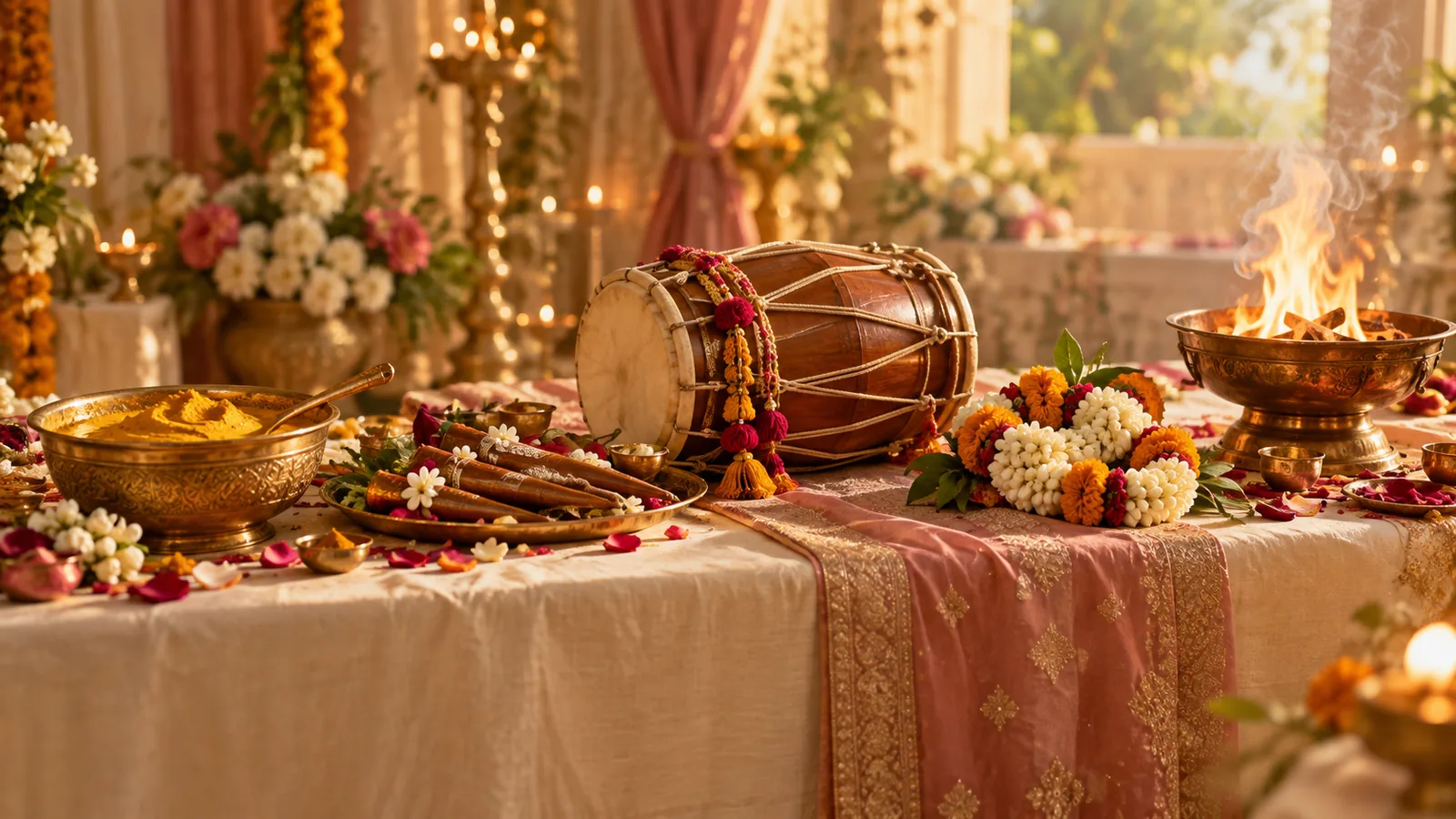
Most North Indian weddings run in this order: the roka, the sagai or ring ceremony and the tilak, then the mehndi, sangeet and haldi in the last days, then the baraat, jaimala and pheras at the muhurat, the vidaai and the reception. Each region renames and reorders them, and some belong to one side only. On the invitation, give every function its own date, time, venue and map, and show each guest only their own.
On this page
- Indian wedding functions in order
- Before the wedding: roka, sagai and tilak
- The last days: pujas, mehndi, sangeet, haldi and the mayra
- The wedding day: baraat, milni, jaimala and the pheras
- After the wedding: the reception, bou bhaat and walima
- Functions that belong to one side
- How the order changes by community
- How families actually list them
- Putting every function on one invitation
- When each invitation goes out
- Wording you can copy
- Designs
- Questions
An Indian wedding is a run of functions, not one event, and no two families list the same run. The names change from state to state, the order bends around the muhurat, and half the functions have a guest list of their own.
This page sets out the functions in the order they usually happen, who leads each one and what its invitation needs, how the order changes by community, and how families put them all on one invitation. Each function links to its own wording guide where we have one.
Indian wedding functions in order
This is the North Indian Hindu order, the one most families start from and then adjust to their own customs.
| Function | When | Who leads it | Its invitation |
|---|---|---|---|
| Roka | A year to a few months before | The bride's family; often only elders attend | A call or a message, two to three weeks ahead |
| Sagai or ring ceremony | Weeks to months before | Either family, often both together | Its own invitation, three to six weeks ahead |
| Tilak | Close to the wedding | The groom's family, at their home | With the engagement, or on the groom's side's card |
| Ganesh puja, mandap muhurat | A few days before | Each family, at home | A line on the main invitation |
| Mehndi | One or two days before | Usually the bride's side | Four to six weeks ahead, to its own list |
| Sangeet | One to three days before, in the evening | Once the bride's family, now often both | Four to six weeks ahead, with the dress code |
| Haldi | The wedding morning or the day before | Each family, at home | Close family, often on the same link |
| Mayra or bhaat | In the days before | The mother's brothers, arriving with gifts | On that family's version |
| Baraat | The wedding day | The groom's family | When it leaves on his card, when it arrives on hers |
| Milni and jaimala | When the baraat arrives | Both families | Inside the wedding card |
| Pheras | At the muhurat | Usually the bride's family | The muhurat time, not just the date |
| Vidaai | After the pheras | The bride's family | Not usually on the card |
| Reception | After the wedding in the north; often the evening before in the south | Usually the groom's family | Often an invitation of its own, to the largest list |
Before the wedding: roka, sagai and tilak
The engagement is often three ceremonies, not one. The roka is the first formal agreement between the families, usually a small gathering. The sagai or ring ceremony is what most people now mean by an engagement. The tilak is held at the groom's home, where the bride's male relatives apply a tilak and give gifts. Our engagement guide sorts out which is which, with messages to send for each.
Many families now hold them on one day. One engagement evening we made an invitation for this season had four cards at one hall: the tilak at 6, a godh bharai for the bride-to-be at 7, the engagement at 8 and dinner from 8:30. A godh bharai at an engagement is not the baby shower of the same name, so a word on the card saves a confused relative. A roka we made had a single event, no photographs and no reply form, because that is what the family wanted.
Once the wedding date is fixed, the save the date goes out: six to eight months ahead for guests in India, eight to twelve for guests abroad.
The last days: pujas, mehndi, sangeet, haldi and the mayra
- Pujas at home. The wedding days open with a puja at each home: a Ganesh sthapana, the mandap muhurat, a griha shanti. Some families start earlier still. Our Sikh designs open with a card for the Akhand Path.
- Mehndi. The henna, usually at the bride's side, one or two days before. Say whether guests will get mehndi too, because they plan their evening around it.
- Sangeet. The music night, one to three days before. It needs a start time guests will be held to, the dress code, and whether dinner is served.
- Haldi. Turmeric at each home, on the wedding morning or the day before, for family and the closest friends. Tell guests to wear something they do not mind getting yellow.
- Mayra or bhaat. The mother's brothers arrive with gifts for her family, a formal and often emotional welcome. Marwari families call it the Mahira Dastoor, Gujarati families have the mameru from the bride's maternal side, and in Punjabi families the bride's mama gives her the chooda.
Because the mayra comes from one mother's family, it appears on one side's version. One groom's invitation this season said only 'Mehendi', because, as the family told us, the mayra was not from his side, while the bride's version of the same wedding read 'Mayra & Mehendi'.
The wedding day: baraat, milni, jaimala and the pheras
On the day itself the groom's side has the sehra and the baraat, the procession to the venue. Punjabi families add the milni, where relatives of the two families meet in pairs, and everyone has the jaimala, the exchange of garlands. Then the wedding itself at the muhurat: the kanyadaan, the pheras, the sindoor and the mangalsutra, and after it the vidaai.
The baraat line is the one that changes between the two sides: the groom's version gives the baraat prasthan, when and where it leaves, and the bride's the baraat aagman, when it arrives.
The muhurat is the one time on the invitation guests treat as real. Print it, give an arrival time beside it, and if it falls before sunrise or after midnight, say so twice: Tamil, Telugu and Marathi muhurats are often at dawn, and Bengali, Odia and Assamese ceremonies late at night. The muhurat guide explains how it is chosen. One family this season, with the pheras at 3 am, printed the wedding as 'evening onwards' and left the pheras time off altogether.
After the wedding: the reception, bou bhaat and walima
The reception usually belongs to the groom's family, and its guest list is the largest of the wedding: colleagues, business contacts, neighbours. That is why it so often goes out as an invitation of its own, which should stand on its own and mention no other function (reception wording). In Tamil and Telugu families it is very often the evening before the wedding, so say so twice.
Bengali families hold the bou bhaat the day after the wedding, Muslim families the walima, hosted by the groom's family after the Nikah, and Marwari families the mooh dikhai, when the new bride is welcomed at the groom's home.
Functions that belong to one side
In most weddings each family invites its own guests, so each side's invitation lists the functions that side hosts. As a starting point:
- The bride's side: the mehndi, the mayra or chooda, the welcome of the baraat, the pheras and the vidaai.
- The groom's side: the tilak at his home, the sehra and ghodi, the baraat, and the reception.
- Both, each at home: the haldi and pujas such as the mandap muhurat. The sangeet is often joint.
This October families asked us for exactly this again and again: one design, each side's names first and each side's own functions. Our guide to bride's side and groom's side invitations has the wording for both, and inviting guests to only some functions covers the tiers inside one family's list.
How the order changes by community
Every community has its own names, and some hold functions nobody else does. The main ones, in order, with the full guide for each:
| Community | Before the wedding | The ceremony | After it |
|---|---|---|---|
| Punjabi | Roka, chunni chadhai, sagai, vatna, jaggo, chooda and kalire | The milni, then the Anand Karaj (Sikh) or the pheras (Hindu) | Doli and vidaai |
| Sikh | Akhand Path and its bhog, chooda, mehndi, jaggo | Four laavan around the Guru Granth Sahib, in the morning, with no muhurat | Langar; the reception, often on another day |
| Marwari | Mudda tikka, pithi dastoor, mahira dastoor, palla dastoor | Baraat and toran, jaimala, then four or seven pheras | Vidaai, then mooh dikhai at the groom's home |
| Gujarati | Chandlo matli, gol dhana, mandap muhurat, pithi, garba | The jaan and ponkhana, hasta milap, four mangal phera | Vidaai |
| Vaishnav | The Gujarati or Rajasthani sequence, with blessings at the haveli | The same rituals; the card opens with Shree Krishnah Sharanam Mama | Vidaai |
| Jain | Vinayakyantra puja, snatra puja, lagna lekhan | Granthi bandhan, then four pheras in many families | Ashirvad from the elders |
| Marathi | Sakhar puda, kelvan, halad chadavane, seemant puja | Antarpat and mangalashtak at the muhurat, often early morning | Varat to the groom's home |
| Bengali | Aashirbad, aiburobhaat, gaye holud | Saat paak and subho drishti, often late at night | Bou bhaat, the day after |
| Odia | Nirbandha, the first card to Jagannath, mangan | Hastagranthi and khoi anla, often late at night | Astha mangala, on the eighth day |
| Assamese | Juron, tel diya, nuoni | Biya, at night | Khastra at the groom's home |
| Tamil | Nichayathartham, sumangali prarthanai, naandi | Kashi yatra, oonjal, the thali at the muhurtham, often at dawn | The reception, very often the evening before |
| Telugu | Nischitartham, pendlikoduku and pendlikoothuru, snathakam | Jeelakarra bellam at the muhurtham, then talambralu | The reception, often the evening before |
| Kannada | Nischay tamulam, naandi | Kashi yatra, dhare eradu, the mangalsutra at the muhurtha | The reception, before or after |
| Kerala | Varies by community | Thalikettu, a ceremony of fifteen to twenty minutes | The sadya, straight after |
| Sindhi | Kachi and pakki misri, berana satsang, saanth, wanwas | Hathiyalo, then the pheras | Datar |
| Muslim: Nikah and Walima | Mangni, manjha, mehndi | The Nikah: ijab and qubool, the mehr, the nikah nama | Rukhsati, then the walima, hosted by the groom's family |
| Christian | Banns read in church; the roce in Goan and Mangalorean families | The church service, vows and rings; a nuptial mass in Catholic weddings | The reception |
Sikh, Muslim and Christian weddings are timed by the day's practicalities, not by an astrological muhurat, so their invitations give a start time rather than a muhurat.
How families actually list them
No family we have made an invitation for has used the textbook list. From this season's invitations:
- Renamed, with the real name kept. A Marwari family called its four functions Padharo Sa, Glitter & Glam, Rang Sari and Saat Vachan, and wrote Mayra, Sangeet, Haldi & Carnival and The Wedding under each, so the elders knew which was which.
- Two functions on one card. One family put the tilak and the sangeet, an hour apart, on a single card, with the wedding and the varmala on the other. A Gujarati family asked for the mandap muhurat at 2 pm and the mameru at 3 pm on one card.
- Two venues. The same Gujarati family held the first day at home and the second at a party plot, so every card carried its own venue and its own map.
- A long start. A family from Bihar began with a two-day Akhand Ramayan puja, then the tilak, haldi, mehndi and sangeet, the baraat, and a reception two days after it.
Putting every function on one invitation
Give every function a card of its own, with its date, start time, venue, a map pin of the gate guests should use, the dress code if there is one, and whether food is served. That is how every design we make is laid out: Sindoori has cards for the ganesh puja, haldi, mehndi, sangeet, baraat, pheras and reception; Pattu for the nischayathartham, panda kaal muhurtham, janavasam, the muhurtham and the reception; Zariya for the manjha, mehndi, nikah and walima; and Ik Onkar for the Akhand Path and its bhog, the chooda, the mehndi, the jaggo and the Anand Karaj, with the time the laavan begin. Each design's page opens a live demo, such as Sindoori's.
Then decide who sees what. Anyone with the full link sees every function, so send it only to the people invited to all of them. Guests invited to some functions get a link with only theirs, and Aangan can give every guest a personal link that greets them by name and shows only their functions. Ask for replies function by function, because the sangeet and the wedding rarely have the same headcount; the RSVP guide shows how.
When each invitation goes out
| What | When to send it |
|---|---|
| Save the date | Six to eight months ahead; eight to twelve for guests abroad |
| Roka | Two to three weeks ahead, often with a call |
| Sagai or engagement | Three to six weeks ahead |
| The wedding invitation | Six to eight weeks ahead |
| Mehndi, sangeet and haldi, to their own lists | Four to six weeks ahead; many families add the haldi to the same link and mention it on WhatsApp nearer the day |
| Reply-by date | Three weeks before the first function |
| Reminders | A week before, then the day before with the next day's timings |
The invitation timeline has the whole sequence, with what to send on WhatsApp at each step.
Function cards you can copy
One card for each function, in English, ready for your names, times and venues. For the whole schedule in Hindi, the mangal karyakram of a shaadi card, see the Hindi card matter guide.
[Bride's name] and [Groom's name]'s wedding
Mehndi · [Day, Date] · [Time] · [Venue]
Sangeet · [Day, Date] · [Time] · [Venue]
Haldi · [Day, Date] · [Time] · [Venue]
Baraat · [Day, Date] · leaves at [Time] from [Place]
Pheras · [Day, Date] · muhurat [Time] · [Venue]
Reception · [Day, Date] · [Time] · [Venue]
Every function, with maps and a reply form: [link]
Roka
[Day, Date] · [Time]
[Venue]
A small gathering of both families.
The wedding invitation will follow.
Ring Ceremony
[Day, Date] · [Time]
[Venue]
Dinner follows the ceremony.
Tilak
[Day, Date] · [Time]
At our home, [Area]
The bride's family comes for the tilak. Lunch follows.
Mehndi
[Day, Date] · from [Time]
[Venue]
Mehndi for everyone who would like it.
Colours of the day: [colours]
Sangeet
[Day, Date] · [Time]
[Venue]
Dress: [festive or Indo-western]
Dinner at [Time]
Performing? Tell [Name] by [Date].
Haldi
[Day, Date] · [Time]
[Venue]
Wear something you do not mind getting yellow.
Mayra
[Day, Date] · [Time]
[Venue]
Welcoming [Mother's name]'s brothers and their families.
Baraat Prasthan
[Day, Date] · [Time]
From [Place] to [Venue]
Safa tying from [Time].
Baraat Aagman and Jaimala
[Day, Date] · [Time]
[Venue]
Pheras
[Day, Date] · muhurat [Time]
Please be seated by [Time]
[Venue]
[Hosts' names]
request the pleasure of your company at the reception of
[Bride's name] and [Groom's name]
[Day, Date] · [Time] to [Time]
[Venue]
Dinner from [Time].
Want these words on a real invitation? See the designs.
Invitation designs
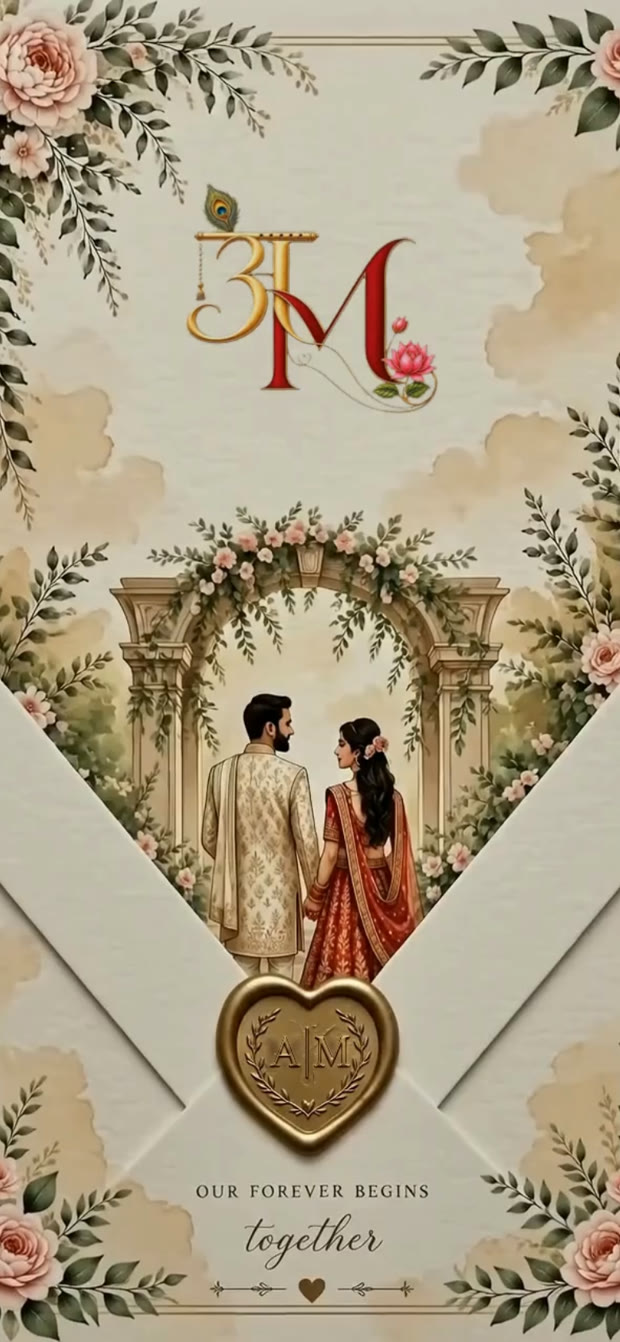
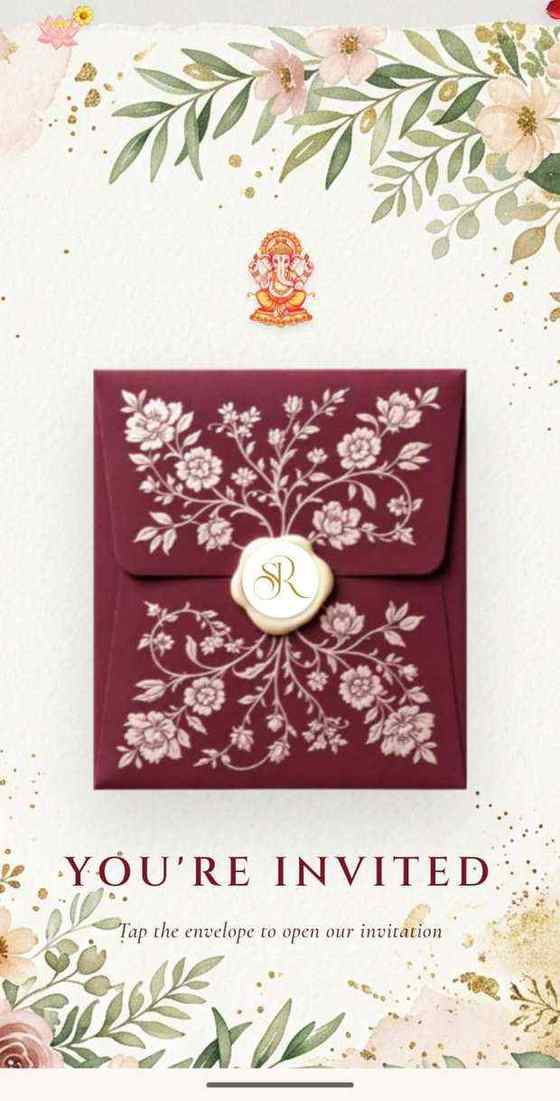
6 designs you can personalise. Open any one to see it full size, with a live demo.

Questions people ask
What is the order of functions in an Indian wedding?
In most North Indian Hindu weddings: the roka, the sagai or ring ceremony and the tilak; then, in the last days, the mehndi, sangeet and haldi; then the baraat, the milni and jaimala, the pheras at the muhurat, the vidaai, and the reception. Each community renames and reorders them.
How many functions does an Indian wedding have?
There is no fixed number. The invitations we made this season carried anything from a single roka to seven cards for one wedding across two days, and some functions appear only on one side's version.
Which functions does the bride's side host, and which the groom's?
As a starting point, the bride's side hosts the mehndi, the mayra or chooda, the welcome of the baraat, the pheras and the vidaai, and the groom's side the tilak at his home, the sehra and baraat, and the reception. The haldi happens at both homes and the sangeet is often joint. Confirm with both sets of parents, because families differ.
Does the haldi come before or after the mehndi?
Either. The mehndi is usually one or two days before the wedding and the haldi on the wedding morning or the day before, so the haldi often comes last. List them on the invitation by date and time, in whatever order your family keeps.
Should every function be on one invitation?
Put them all on one invitation for the people invited to all of them, and give guests who are invited to only some a version that shows only theirs. Anyone who has the full link sees every function.
When should each invitation be sent?
The save the date six to eight months ahead, the wedding invitation six to eight weeks ahead, the mehndi and sangeet invitations four to six weeks ahead, and the reply-by date three weeks before the first function. A roka needs two to three weeks' notice and an engagement three to six.
What is the difference between roka, sagai and tilak?
The roka is the first formal agreement between the families, usually small. The sagai or ring ceremony is the engagement most people mean today. The tilak is held at the groom's home, where the bride's male relatives apply a tilak and give gifts. Many families now hold all three on one day.


